Full-stack remediation, from code to container






How agentic remediation works

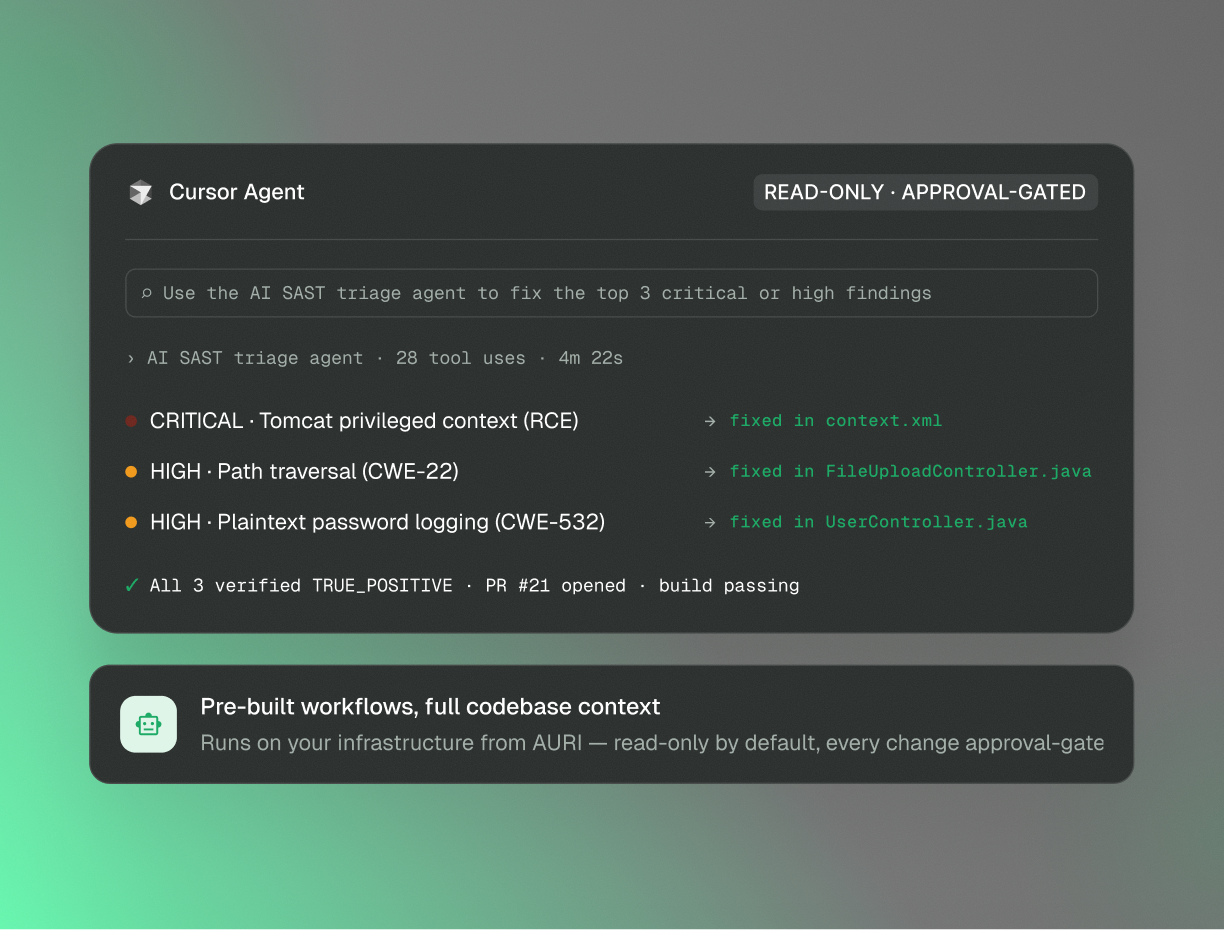
See it in action
Your Tools, Your Languages
— All Secured

Frequently Asked Questions
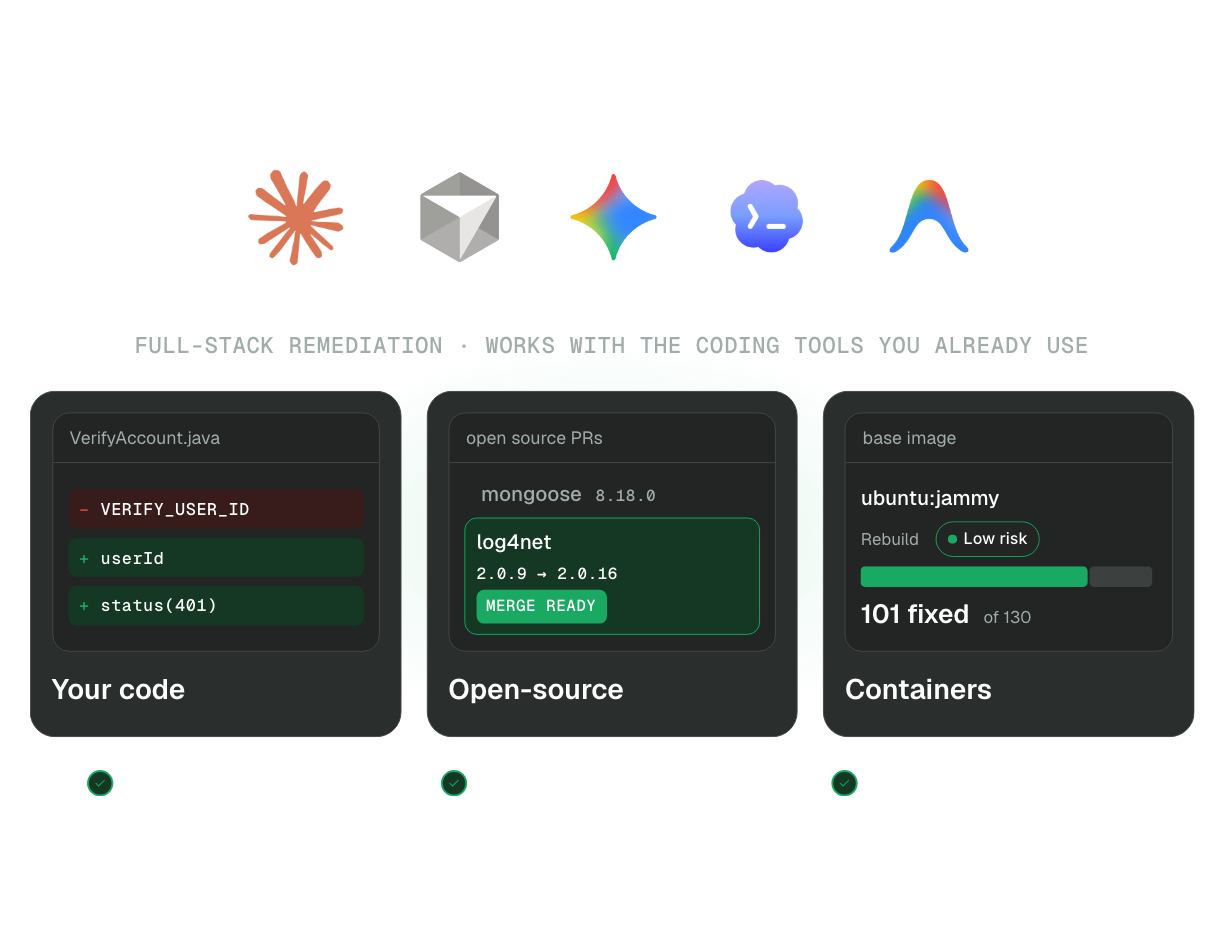
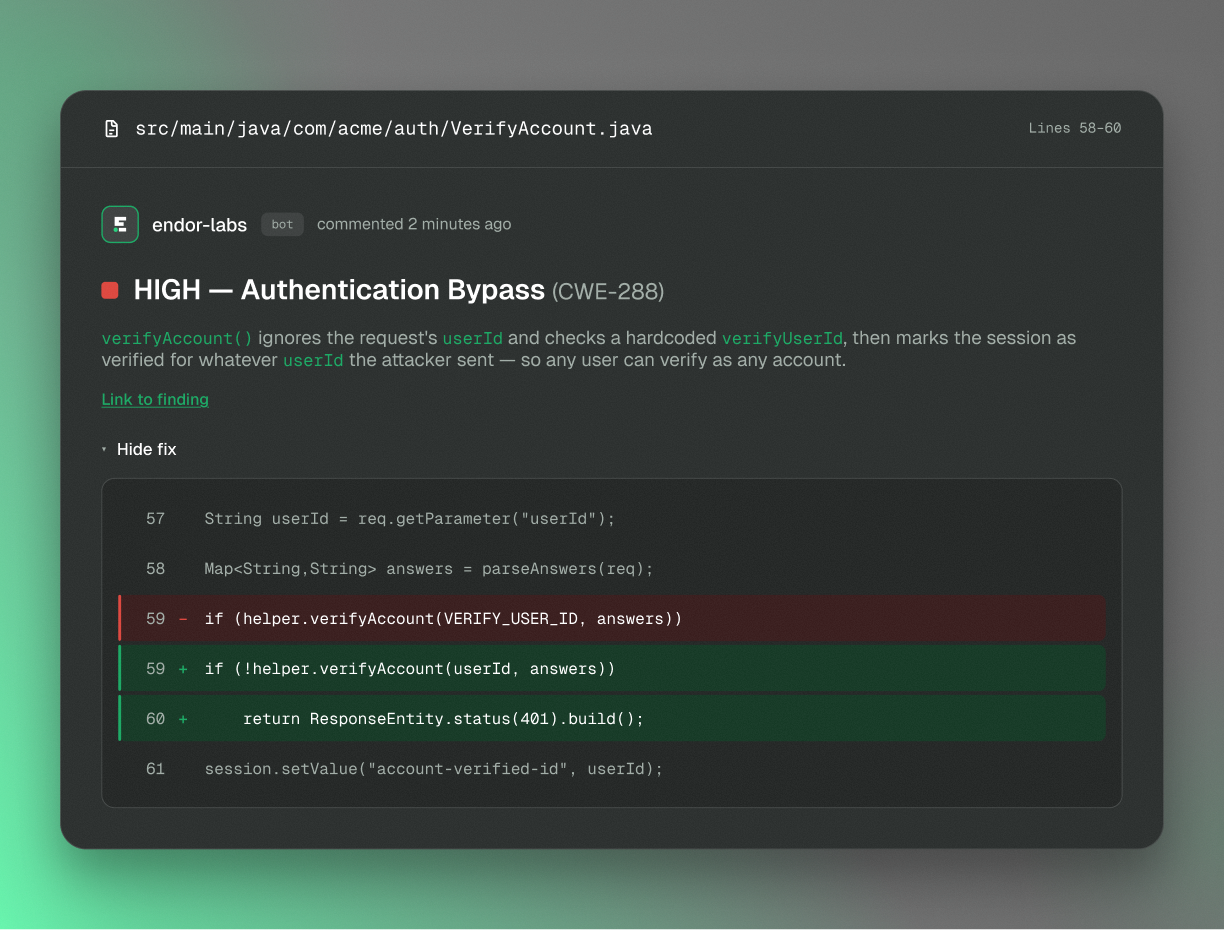
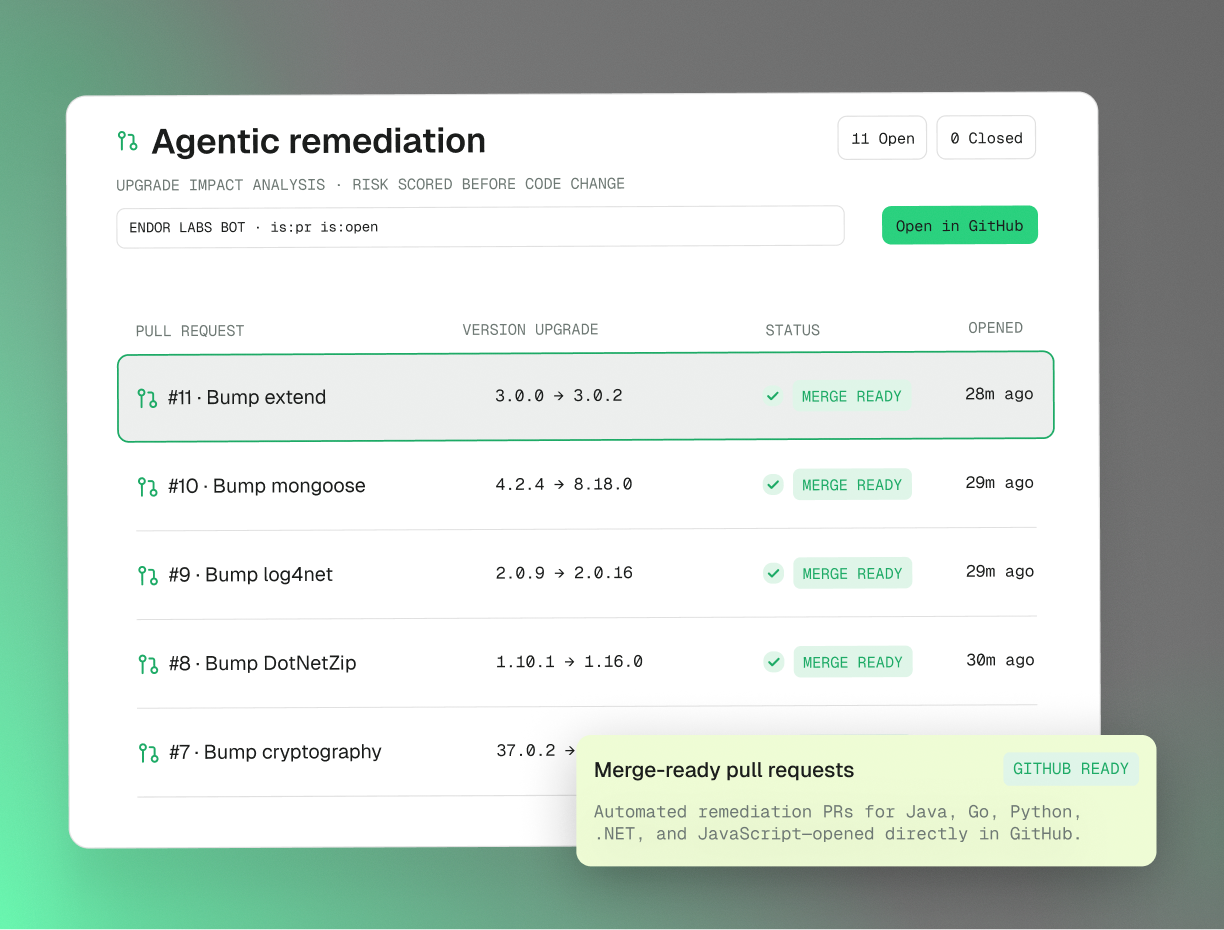
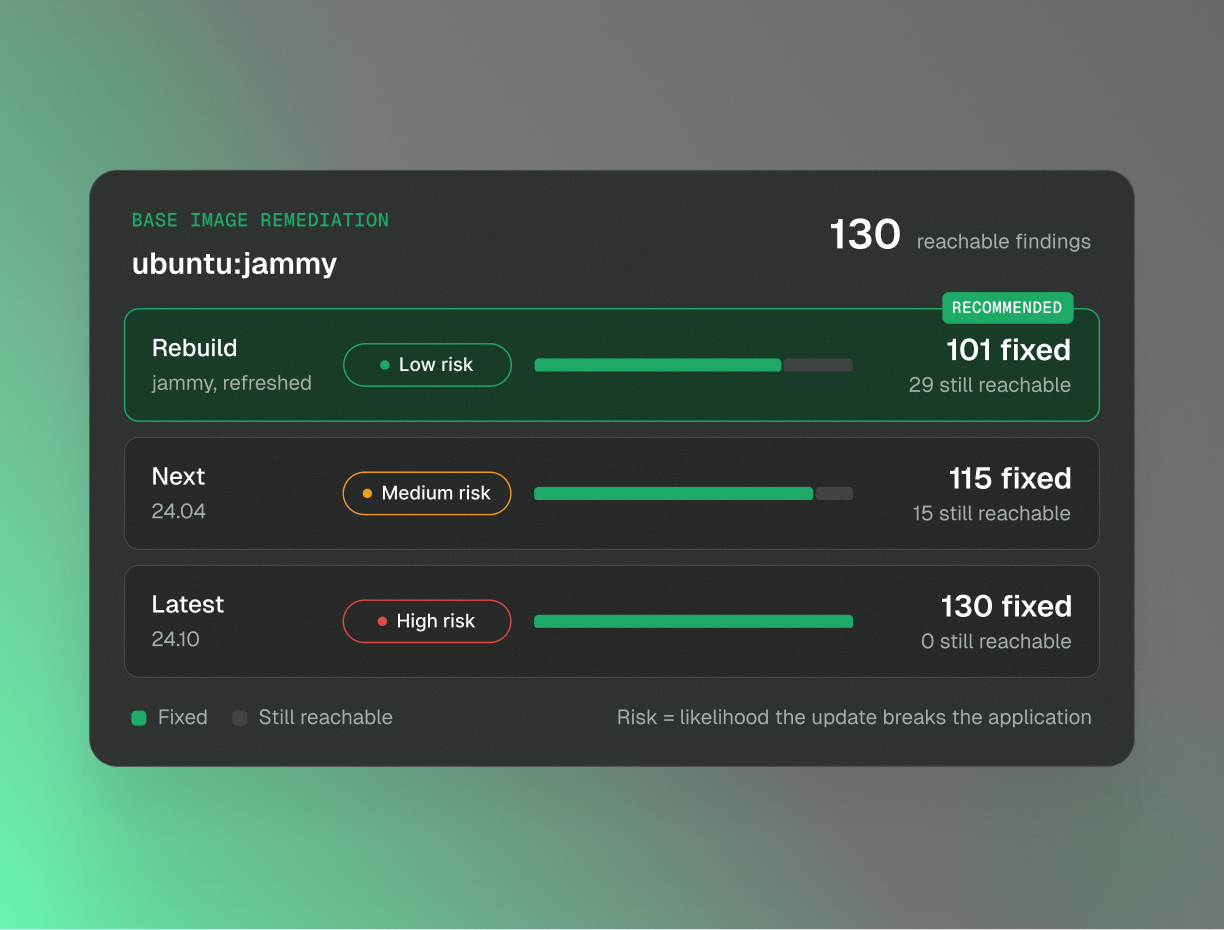
Three layers: first-party code with context-aware AI SAST fixes, open-source dependencies with Upgrade Impact Analysis and Endor Patches, and container images with base image remediation. Full-stack reachability across all three means teams fix what's exploitable first.
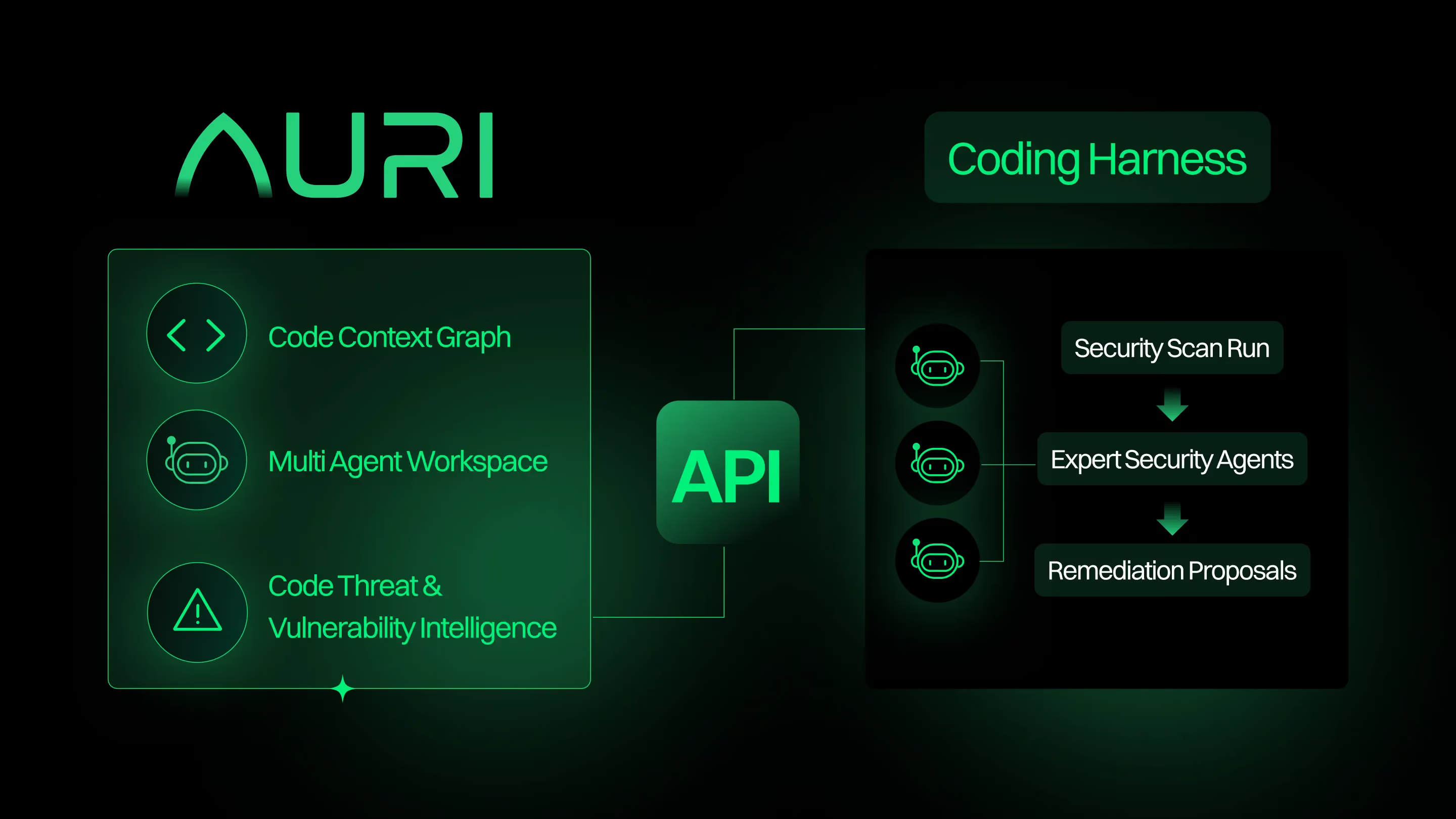
AURI Agents are pre-configured AI agents that each perform a specific security task, such as fixing AI SAST findings or remediating vulnerable dependencies. They come wired into Endor Labs' reachability analysis, upgrade impact, and the full finding and policy graph, and they're open source, and run inside the agent tools your developers already use.
Agents run on your infrastructure, with your LLM keys and source-control credentials. Your code and secrets never cross into Endor Labs' boundary and your token spend stays yours, while telemetry flows back to the AURI Agents Hub so you keep central visibility.
No. Most agents are read-only by default and cannot edit files, open pull requests, or write policy. Agents that can make changes declare exactly what they're allowed to do and require confirmation, policy changes need separate AppSec sign-off, and every change happens in your own Git provider under your own credentials.
Upgrade Impact Analysis scores each upgrade High, Medium, or Low risk based on the breaking changes it would bring, so teams merge the low-risk ones right away. When an upgrade is too disruptive, Endor Patches backport only the commits that fixed the vulnerability onto the version you already run, built as a hermetic, reproducible artifact.
In Endor Labs' testing, agents with Endor Labs context performed the same tasks 2.8x faster while using 92% fewer tokens than an unaugmented agent. Customers report 6x faster CVE remediation, 83% fewer blocked pull requests, and 10x fewer security tickets.