Financial Services

Keep pace with regulators without breaking the platforms your business runs on
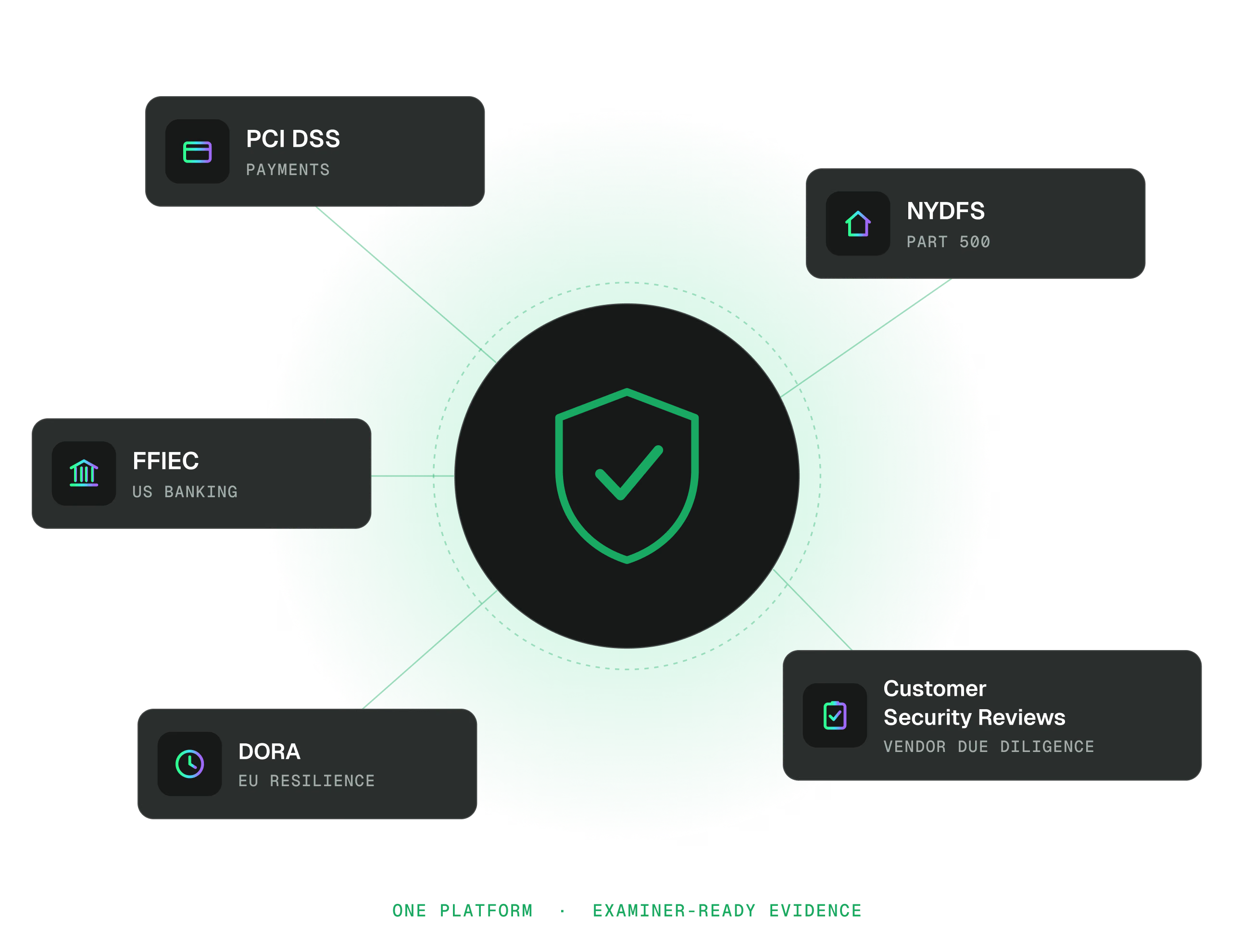
Endor Labs makes regulated AppSec operational: agentic remediation closes critical CVEs without breaking core banking, payments, or trading systems, AI SAST catches the logic flaws that matter most in financial applications, and Agent Governance puts every AI coding agent under examiner-ready oversight.
Loved by security teams, painless for developers at:

How Endor Labs works for financial services

Hit aggressive remediation SLAs without breaking the platforms the business runs on
PCI DSS, FFIEC, DORA, and customer security agreements set tight remediation windows — but upgrading to close one CVE can break core banking, ledger, or payment systems the business cannot take offline. Endor Labs pairs every fix with the evidence to apply it safely, including transitive dependencies that aren't in the application team's direct control.
Catch the logic flaws that matter most in financial applications
IDORs, authentication bypasses, and business logic errors are the highest-stakes flaws in financial applications — and the ones traditional SAST misses while drowning AppSec teams in low-quality findings. AI SAST finds them, including the new failure modes AI-generated code introduces.
Govern AI coding agents in a regulated environment
Developers adopt Cursor, Claude Code, and Copilot independently, and examiners now expect documented oversight of AI usage in regulated environments. Endor Labs gives security and compliance teams centralized visibility, real-time policy enforcement, and an audit trail over every AI coding agent in use.
“Over 97% of vulnerabilities flagged by our previous tool weren't reachable in our application. Endor Labs shows the few impactful vulnerabilities, so we can patch quickly, focusing on what matters.”
Travis McPeak

Security Lead, Cursor (Anysphere)

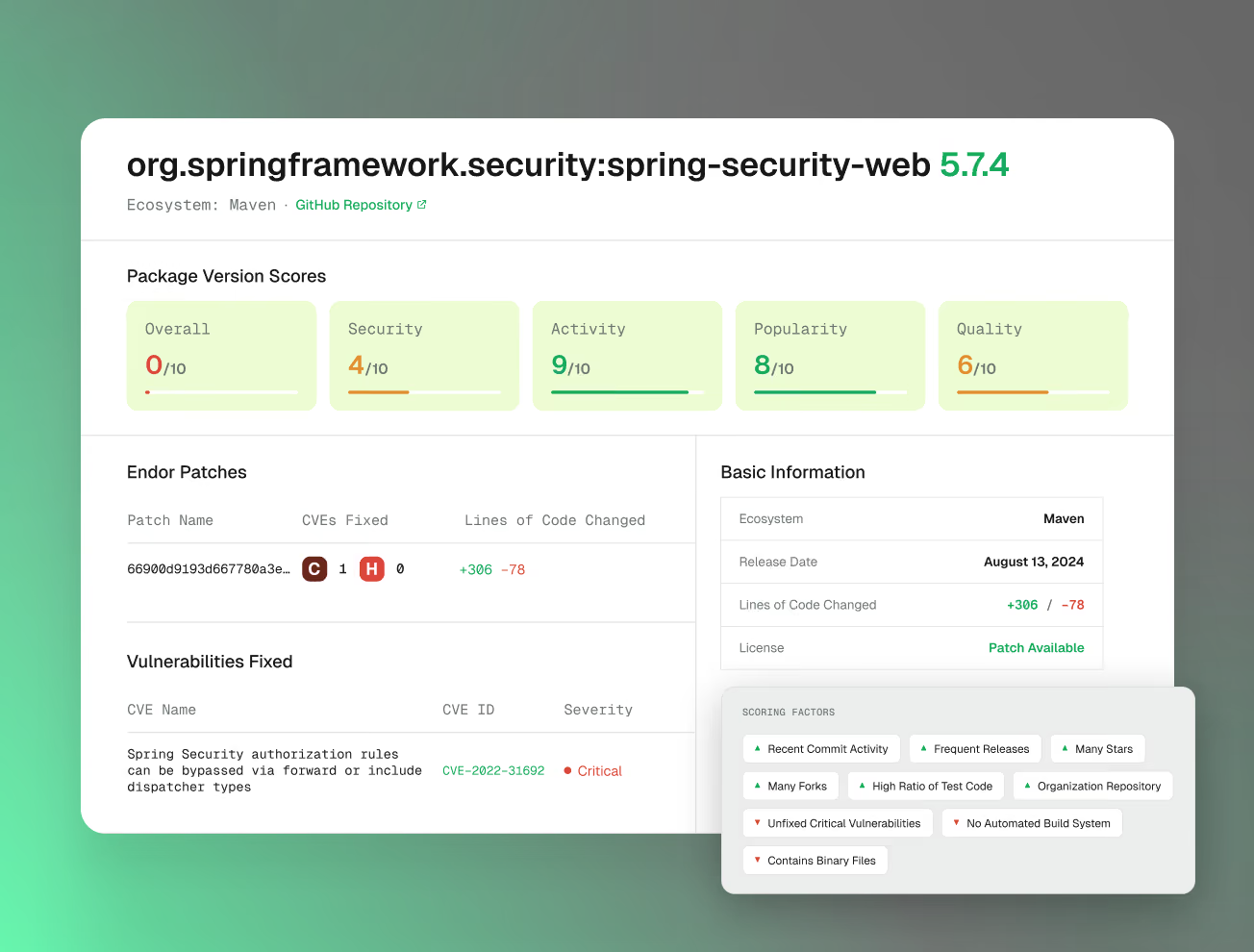
Audit-ready patches graphic showing patch provenance and compliance details
Agentic remediation
Close the loop on every vulnerability with remediation agents that rank fixes by upgrade risk, open merge-ready pull requests, and backport security patches when a full upgrade is too disruptive for the change window.
See exactly what an upgrade will break before you commit, with Upgrade Impact Analysis attached to every merge-ready fix.
Apply minimal, backported security patches with Endor Patches when an upgrade does not fit the change window — including transitive dependency fixes.
Meet PCI DSS, FFIEC, DORA, and customer SLAs without taking core platforms offline — customers report 6x faster CVE remediation and 83% fewer blocked pull requests.
Learn more
Logic-flaw detection
AI SAST catches the application logic flaws that drive almost every consequential breach in financial services — the ones legacy SAST cannot see.
Catch complex logic flaws — IDORs, authentication bypasses, business logic errors — that legacy SAST cannot see.
Review every pull request continuously, including AI-generated code, with the security context legacy tools lack.
Cut false positives so AppSec reviewers spend their time on findings that actually move risk.
Learn more
Code trace showing attacker-supplied data flowing from source to sink across files and functions
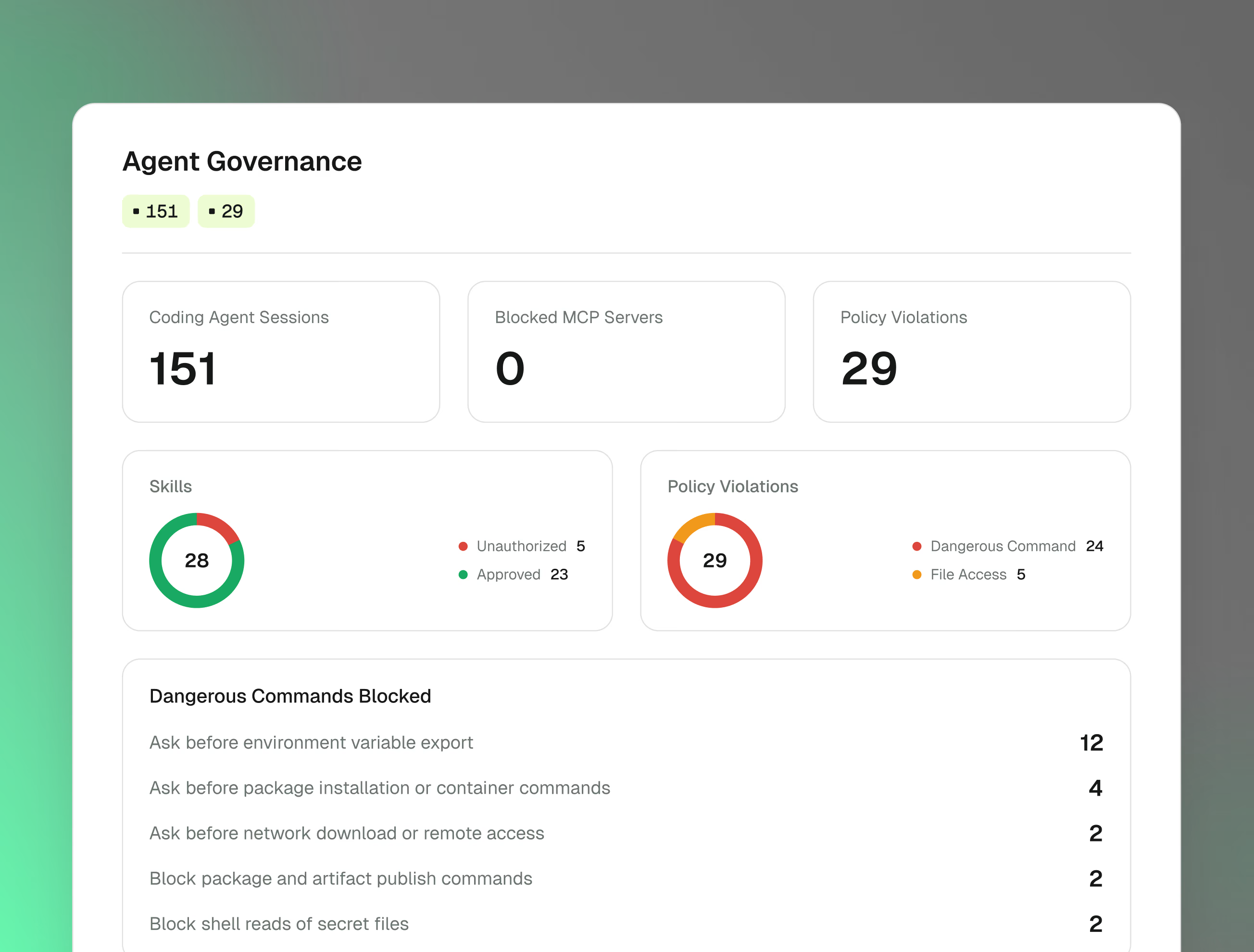
Coding Agent Governance
Coding Agent Governance gives security teams real-time policy enforcement and audit trails over the AI coding agents now writing code in regulated environments.
Get a complete, searchable audit log of every action AI coding agents take in the regulated environment.
Enforce real-time guardrails on dangerous commands, sensitive file access, and unauthorized MCP servers — regardless of what the model decides.
Produce agent-activity evidence examiners and auditors accept without relying on developer self-reporting.
Learn more

See it in action

Flowchart showing integration paths from GitHub, GitLab, and PHP to Slack and Microsoft platforms, with a C# icon connected to Slack.

Your Tools, Your Languages
All Secured

Learn how Endor Labs fits into your ecosystem.
Flow diagram connecting software development tools and platforms including .NET, JetBrains, GitHub, Google, and Vercel.

FAQs

Why do financial services teams need a different approach to remediation?

Regulated remediation windows from PCI DSS, FFIEC, and DORA don't bend, but the platforms the business runs on can't tolerate broken upgrades. Endor Labs resolves that conflict with Upgrade Impact Analysis before every fix and backported patches from Endor Patches when a full upgrade doesn't fit the change window.

Why is vulnerability volume becoming a bigger problem now?

Frontier AI models like Claude Mythos have made vulnerability discovery cheap — for researchers and attackers alike — and AI coding agents are expanding codebases and dependencies faster than security teams can triage. That shifts the real risk to flaws that are reachable, exploitable, and unfixed, regardless of severity score. Endor Labs prioritizes by reachability and gives remediation agents deterministic context, so the flood gets fixed instead of queued.

Can we close a CVE without a version upgrade?

Yes. Endor Patches backports the security fix to your current library version as a hermetic, reproducible, auditable artifact — so you resolve the CVE without the cascading test failures of a major-version upgrade.

What about vulnerabilities in transitive dependencies we don't control?

Regulators don't care whose dependency it is. Endor Labs closes transitive dependency vulnerabilities that are not in the application team's direct control, through risk-ranked upgrades or backported patches.

How does AI SAST differ from the SAST tool we already run?

Legacy SAST pattern-matches, so it misses IDORs, authentication bypasses, and business logic errors — the highest-stakes flaws in financial applications. AI SAST reasons about how code behaves, reviews every pull request including AI-generated code, and cuts the false positives that bury real findings.

Will examiners accept the Agent Governance evidence?

Agent Governance produces a complete, searchable audit log of every agent action, backed by real-time policy enforcement — evidence designed for examiners and auditors, without relying on developer self-reporting.

Code without compromise