Endor Patches

Close critical CVEs without upgrading the library
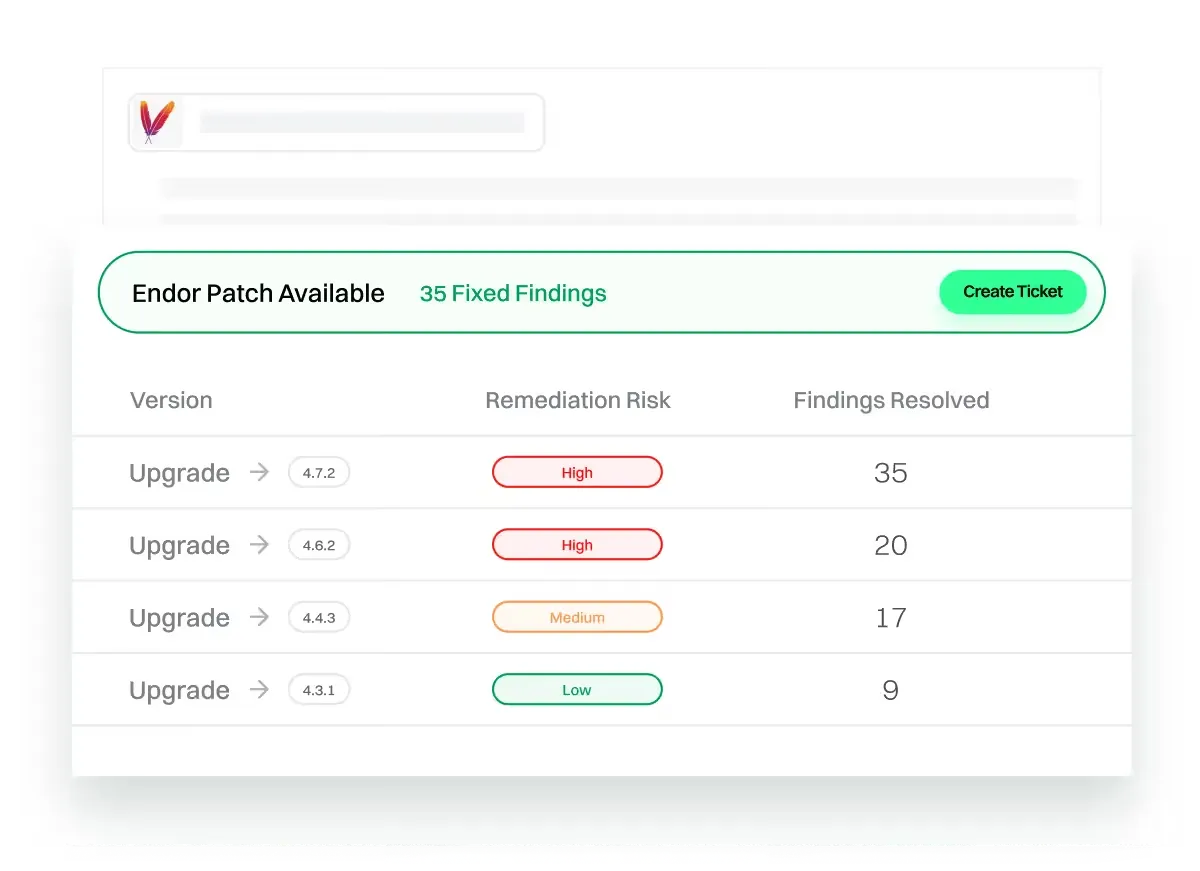
Open source security fixes usually live in a much newer version, bundled with breaking changes your application can't easily absorb. Endor Patches backport just the security fix to the version you're already running — minimal, reproducible, and auditable — so teams close critical CVEs without an upgrade and without breaking the application.
Endor Patches hero graphic showing patched dependency versions
Loved by security teams, painless for developers at:

How Endor Patches work

Fix vulnerabilities without a risky upgrade
The security fix usually lives in a much newer library version bundled with breaking changes your application can't easily absorb. Endor Patches backport just the fix to the version you already run, so you close the CVE without the upgrade risk, retesting, and rollback.
Remediate transitive vulnerabilities you don't control
When a vulnerable dependency is buried deep in the tree, the application team has no clean upgrade path. Endor Patches resolve those transitive CVEs at build time, without asking developers to refactor or change manifest files.
Prove to auditors exactly what was fixed
Auditors and 3PAOs need evidence that each vulnerability is actually resolved. Endor Patches are minimal and built as reproducible artifacts, so you can show exactly what changed and why.
“Over 97% of vulnerabilities flagged by our previous tool weren't reachable in our application. Endor Labs shows the few impactful vulnerabilities, so we can patch quickly, focusing on what matters.”
Travis McPeak

Security Lead, Cursor (Anysphere)

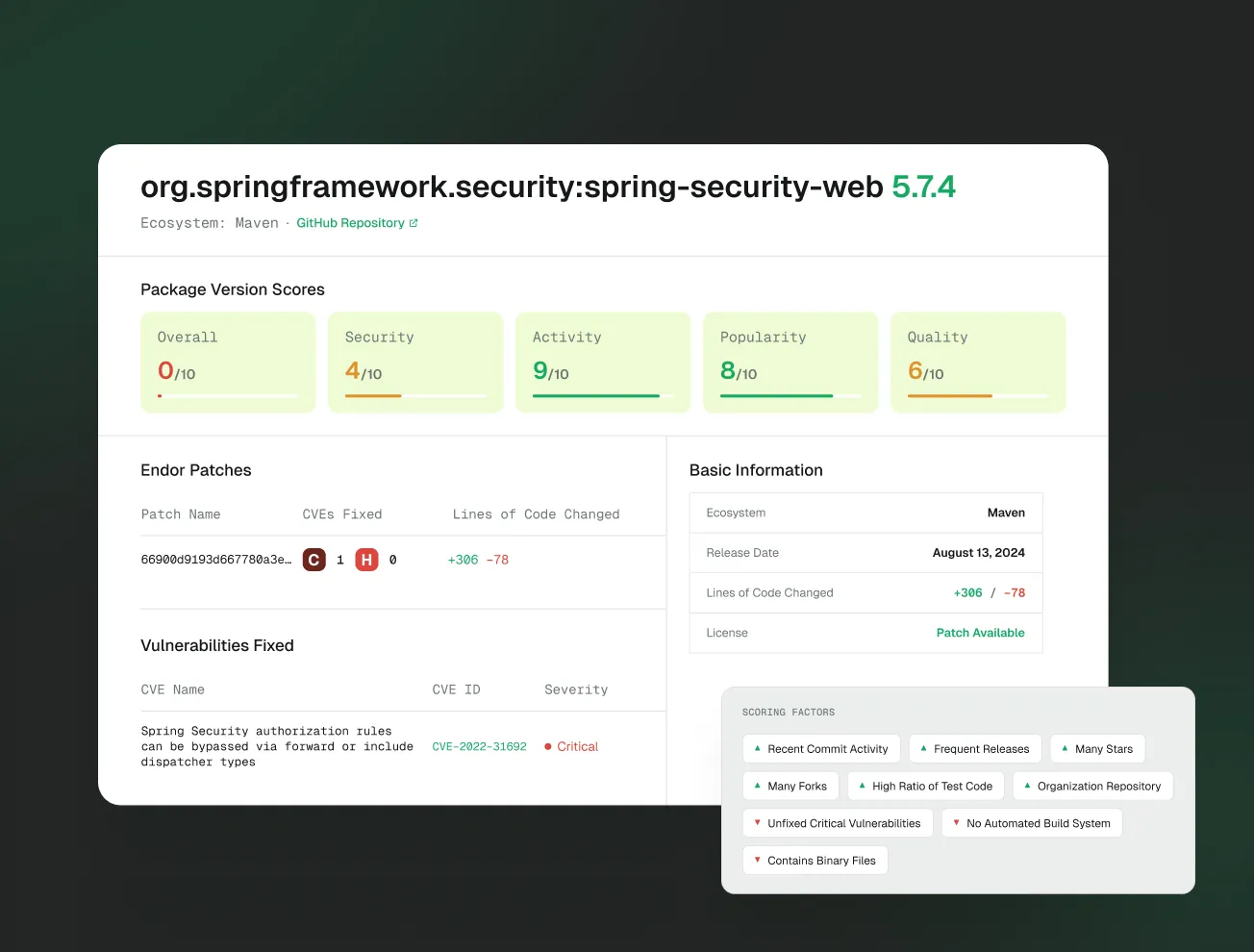
No-upgrade fixes graphic showing patched versions without breaking changes
No-upgrade fixes
Backport the upstream security fix to the version you're already running, so the CVE resolves without an upgrade.
Backport the upstream security fix to the version you are already running, so the CVE resolves without an upgrade.
Resolve transitive dependency vulnerabilities that are not in the application team's direct control.
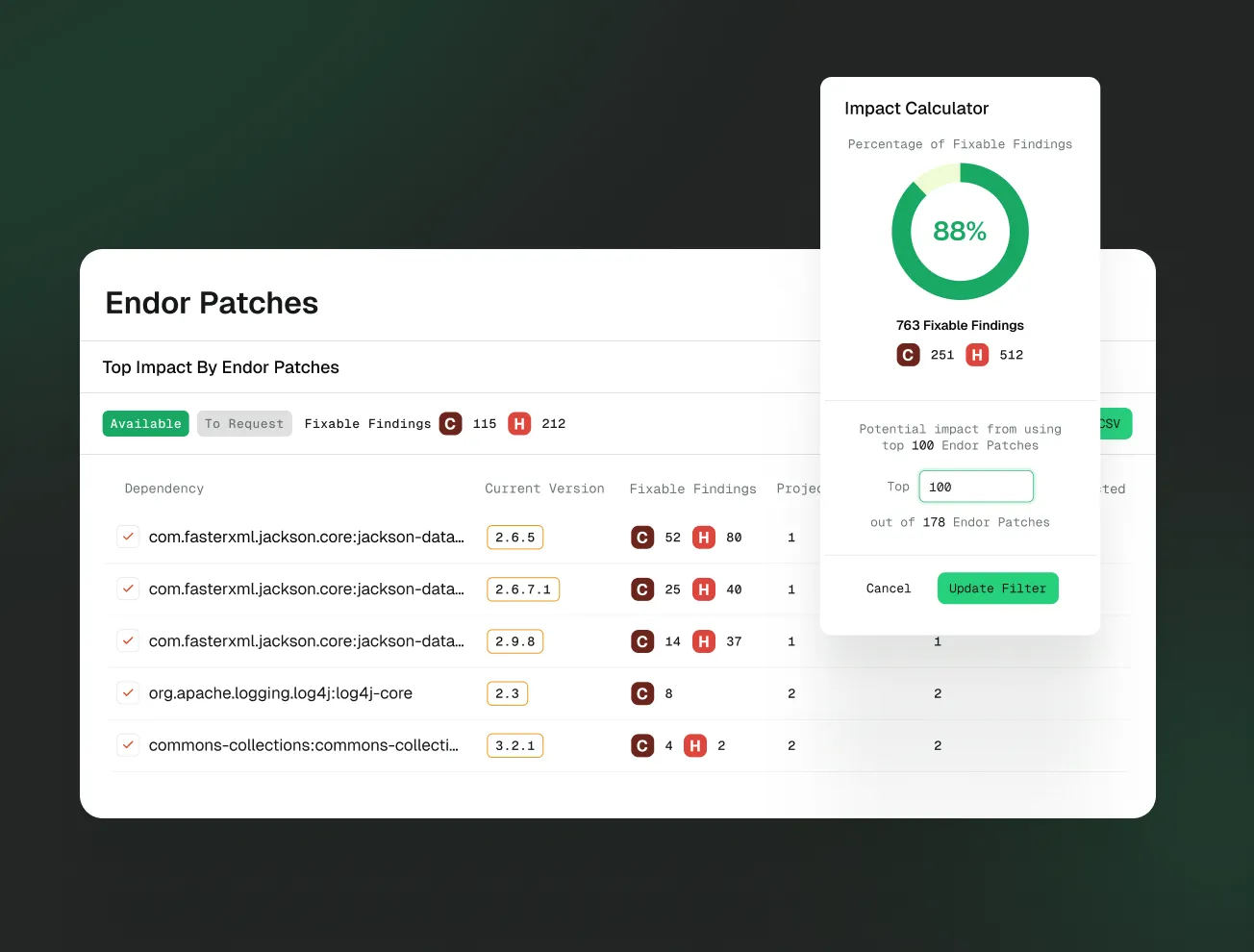
Apply patches consistently across hundreds or thousands of repositories without opening per-repo pull requests.
Learn more
Audit-ready patches
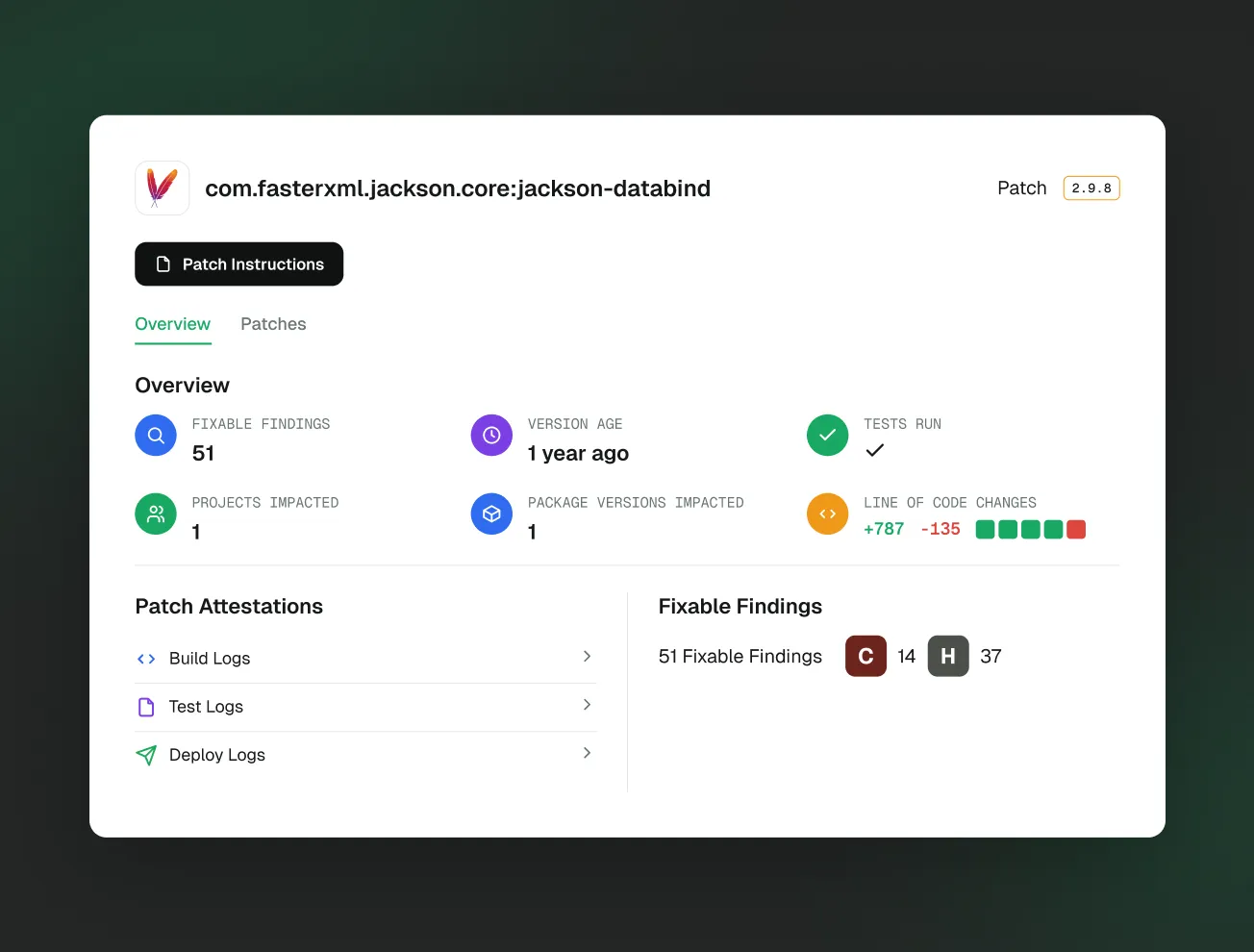
Every patch is scoped only to the security fix and built as a reproducible artifact you can verify.
Scope every patch to the security fix only — no extra changes, no new dependency conflicts.
Build patches as hermetic, reproducible artifacts so auditors, 3PAOs, and QSAs can verify exactly what changed.
Provide the provenance evidence compliance teams need for SLSA Level 3 attestations.
Learn more
Audit-ready patches graphic showing patch provenance details
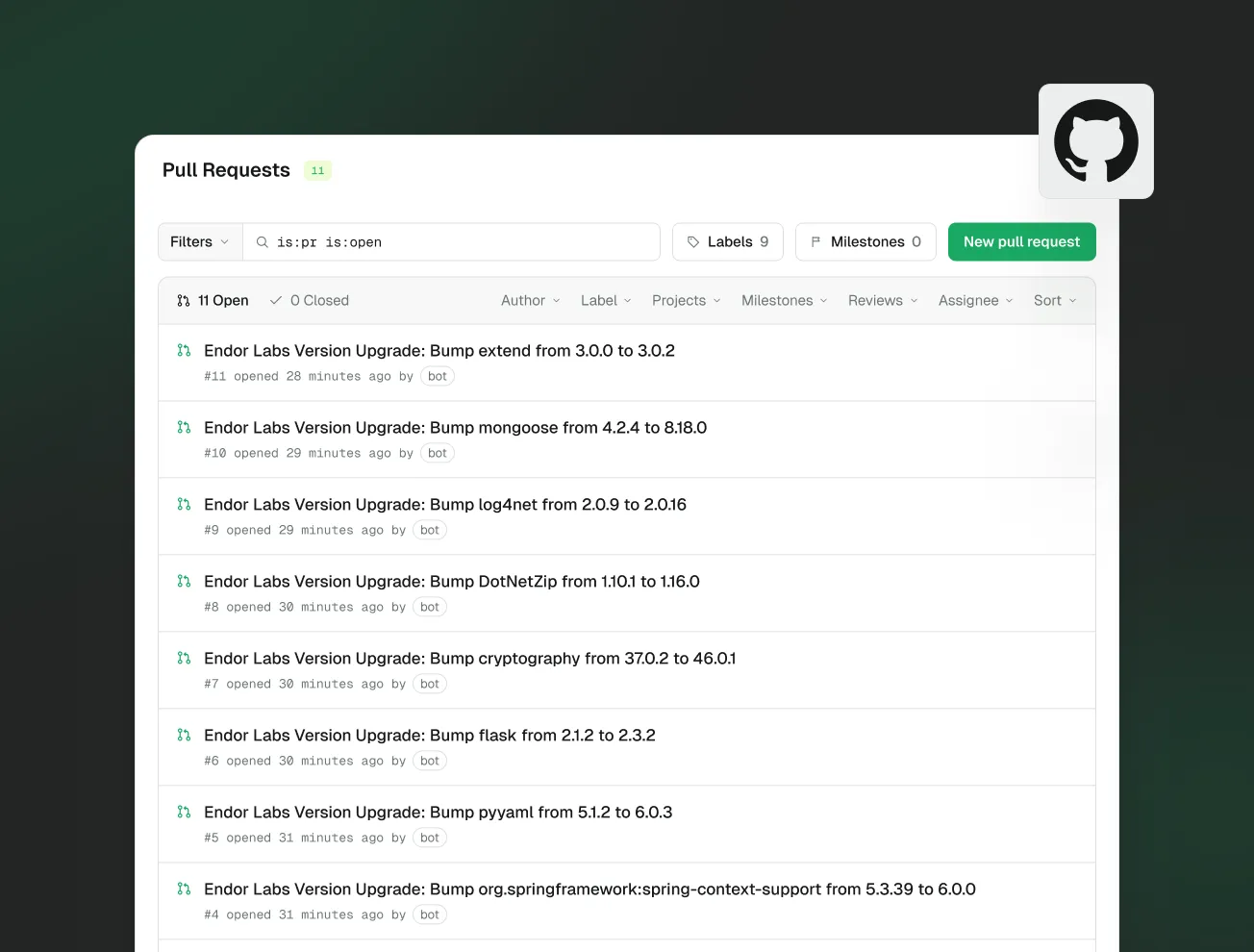
Automated remediation graphic showing fixes applied to vulnerable dependencies
Automated remediation
Prioritize patched artifacts during dependency resolution so newly disclosed CVEs resolve on the next build, with no code change.
Auto-patching prioritizes patched artifacts during dependency resolution, so newly disclosed CVEs resolve on the next build with no code change required.
Hand the fix off from Upgrade Impact Analysis when an upgrade is too disruptive — same platform, same workflow.
Drop into the artifact repositories and CI/CD systems teams already use — JFrog, Nexus, GitHub, GitLab — without rip-and-replace.
Learn more
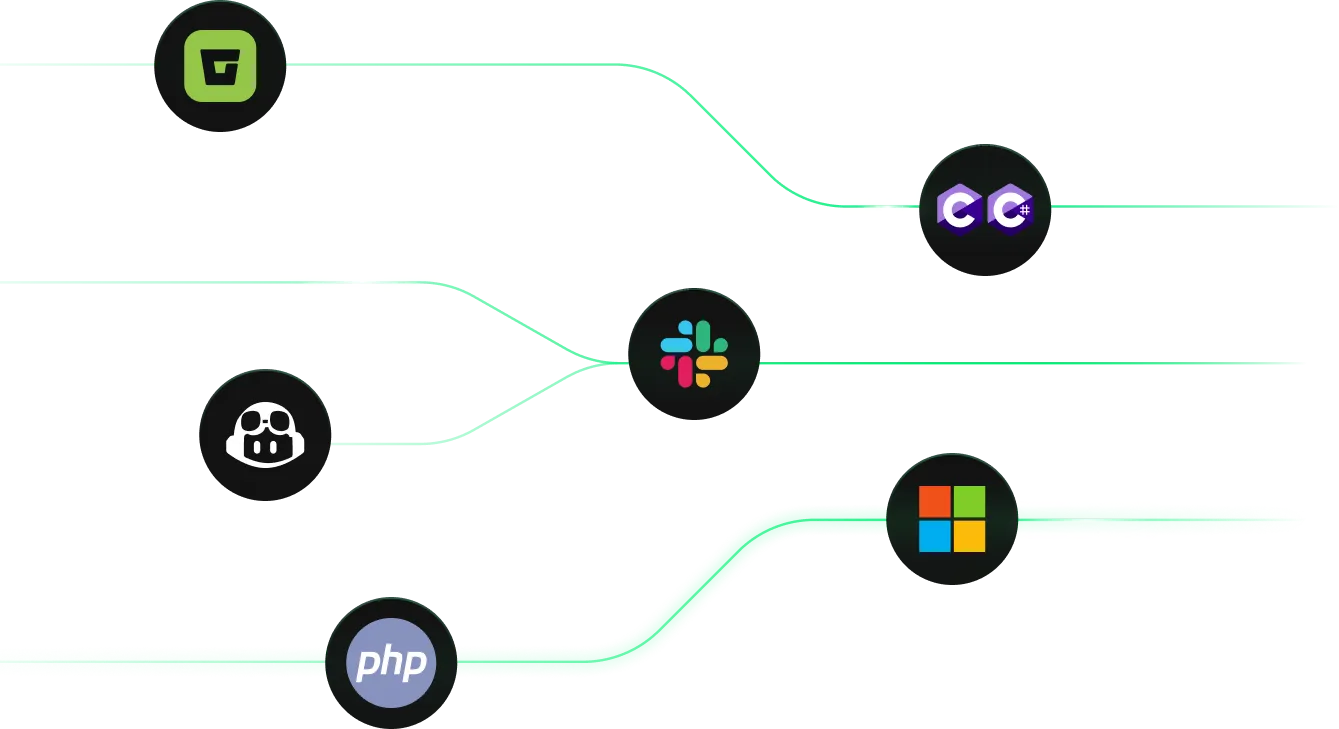
Flowchart showing integration paths from GitHub, GitLab, and PHP to Slack and Microsoft platforms, with a C# icon connected to Slack.

Your Tools, Your Languages
All Secured

Learn how Endor Labs fits into your ecosystem.
Flow diagram connecting software development tools and platforms including .NET, JetBrains, GitHub, Google, and Vercel.

FAQs

What is an Endor Patch?

A backport of the upstream security fix from a newer library version to the version you're already running. It's scoped only to the fix and built as a reproducible artifact, so you close the CVE without upgrading and can audit exactly what changed.

How is this different from upgrading the dependency?

An upgrade pulls in a newer version bundled with unrelated changes that can break your application. An Endor Patch applies only the security fix to your current version, so you avoid the breaking changes, retesting, and rollback risk of a full upgrade.

Can it fix transitive dependencies?

Yes. Transitive vulnerabilities often have no clean upgrade path for the application team. Endor Patches resolve them at build time without requiring developers to change manifest files or refactor.

Will auditors accept a backported patch?

Patches are minimal and built as hermetic, reproducible artifacts, and they provide the provenance evidence teams need for SLSA Level 3 attestations — so auditors, 3PAOs, and QSAs can verify exactly what was fixed.

Does it fit our existing pipeline?

Endor Patches drop into the artifact repositories and CI/CD systems you already use — JFrog, Nexus, GitHub, GitLab — with no rip-and-replace. Auto-patching then resolves newly disclosed CVEs on the next build.

What results do teams see?

Customers report 6x faster CVE remediation and 83% fewer blocked pull requests after adopting agentic remediation with Endor Patches.

Code without compromise