AI Security Review

Find and fix the real flaws in every pull request
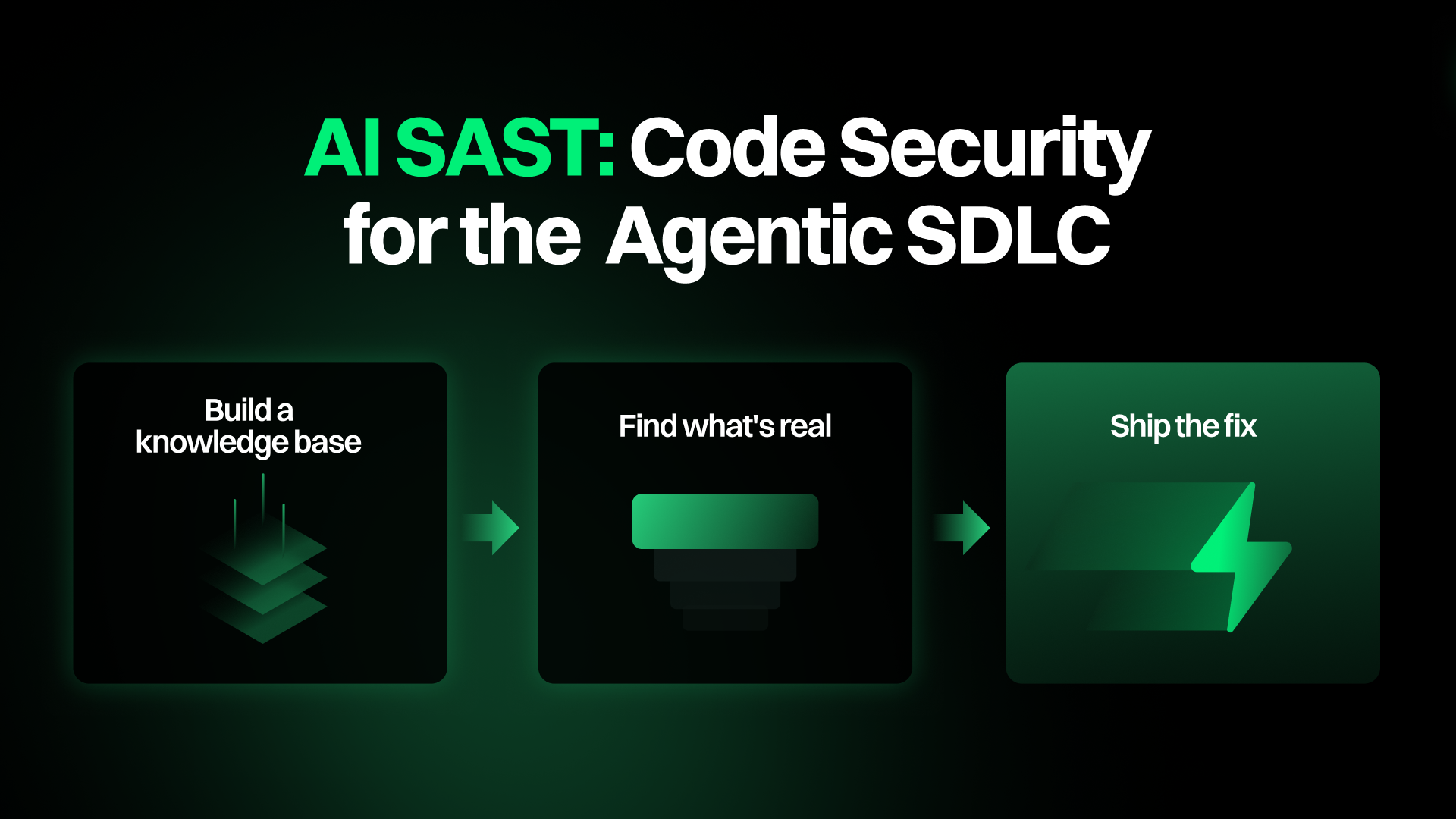
AI Security Review builds an understanding of your application, confirms what's exploitable, and hands developers a working fix.
Loved by security teams, painless for developers at:

How AI Security Review works

Find complex flaws that matter
Pattern matching misses the flaws that do the most damage: broken access control, IDOR, insecure design, and business logic. AI Security Review reasons about how code behaves across your entire application, so those flaws surface before merge.
Fix before merge
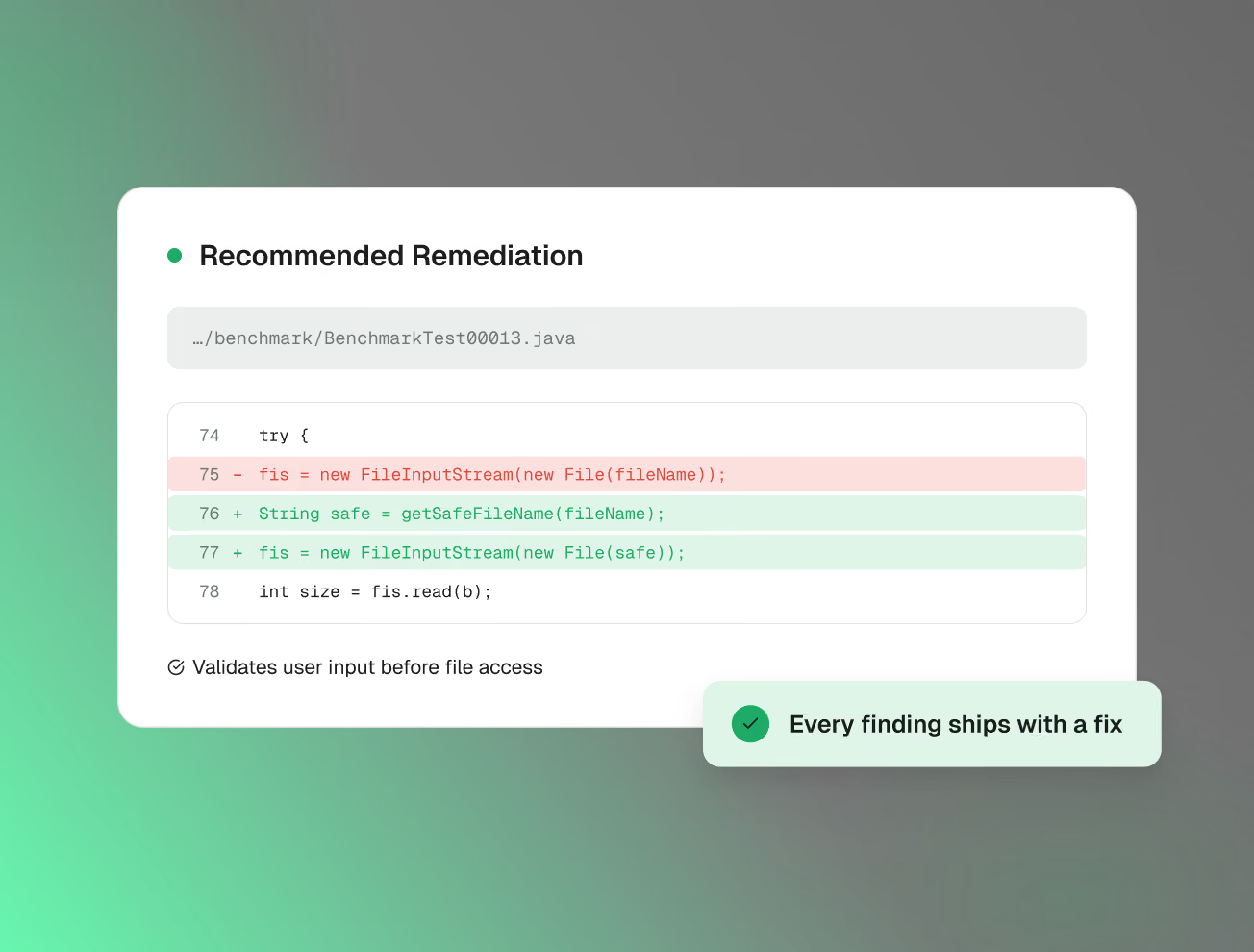
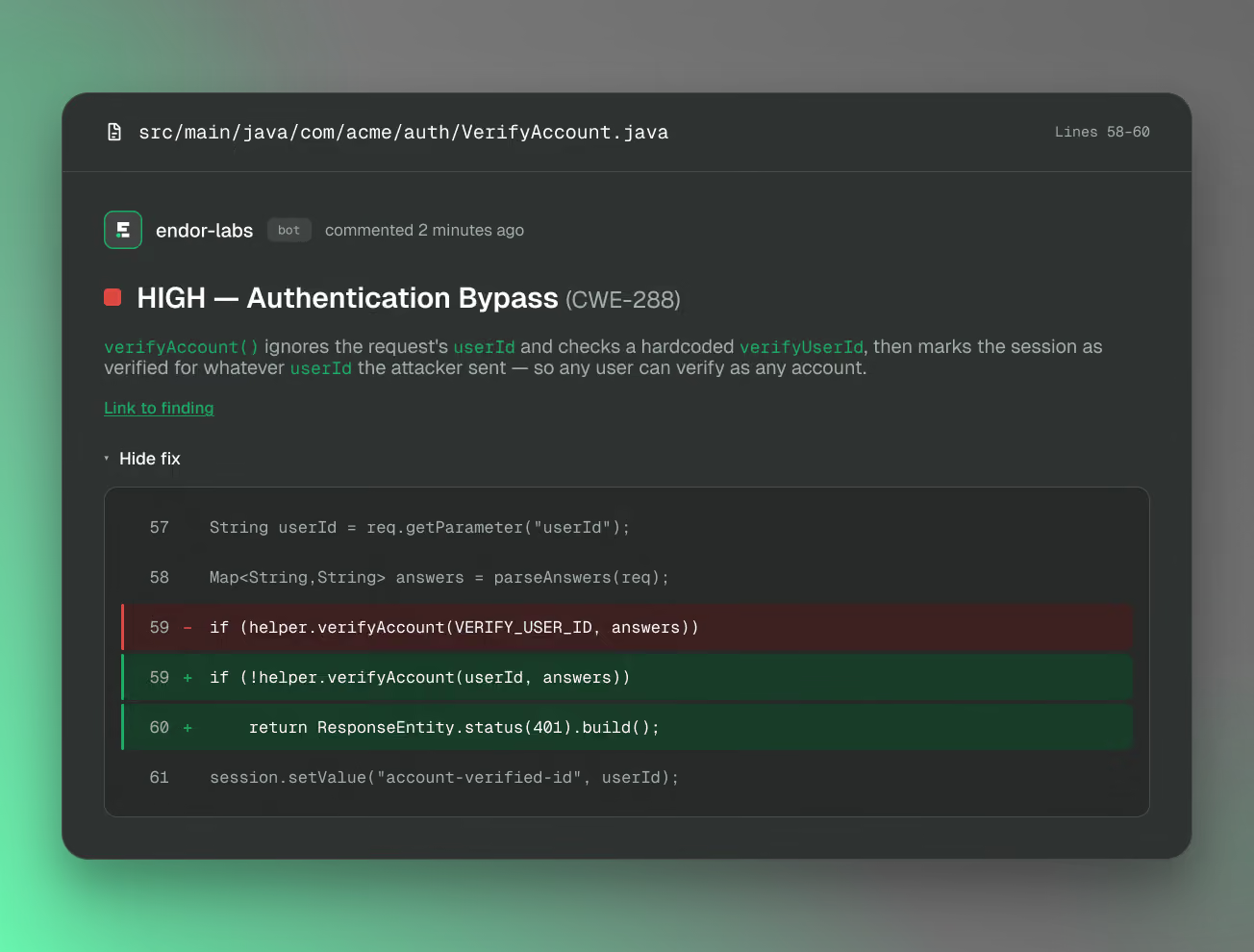
Every confirmed vulnerability comes with a context-aware fix, so developers can resolve it in place. Issues get closed before merge, when they're fast and cheap to resolve, and the security backlog stops growing.
Continuous security review
AI writes more code than any team can review by hand, and manual review can't cover 1,000+ PRs a day across hundreds of repositories. AI Security Review runs on every pull request, so coverage scales with your code volume.
“Endor Labs' unique reachability-based analysis and native integrations into our agentic software development stack keep our developers focused on rapidly finding and fixing real risks in the SDLC, so we ship faster with confidence.”
Sunil Agrawal Photo
Sunil Agrawal
CISO, Glean
Detect and fix Card
Reason about your code, not just patterns
Detection agents read a change the way a security engineer would. They trace how data moves through your code, across files and functions, to catch the flaws a pattern can't describe.
Find more real flaws. In our benchmarks,  we found 3x the vulnerabilities of frontier models and 2x rule-based SAST.
Catches the flaws rules miss: broken access control, IDOR, injection, and insecure design.
Reason with the context of your whole application, not just the diff. A code graph maps how your code connects and behaves, so multi-file flaws don't slip through.
Learn more
Fix in place, before merge
Remediation agents propose a specific fix alongside every confirmed vulnerability, matched to your codebase. Developers stay in flow instead of switching to a separate console.
Ship a context-aware fix with every finding, turning the 4+ hours of research per SAST result into minutes.
Check the whole change in one PR scan: code, vulnerable dependencies, and hardcoded secrets, all posted as PR comments.
Run on every pull request across GitHub, GitLab, and Bitbucket, and plug into your CI/CD and policy engine. Fewer than 10% of PRs need human review after rollout.
Learn more
AI Security Review dashboard showing safe pull requests, review time saved, and findings by category, project, and language
Confirm what's real, without the noise
A triage agent classifies every finding as true positive, false positive, or unknown, with a written explanation for each call. Developers act on confirmed issues instead of wading through alerts.
Filter out false positives before they ever reach a developer or security engineer.
Read the reasoning behind every classification, so your team can audit and learn from each call.
Apply policies to suppress known-good patterns, block a pull request only on high-confidence findings, or route findings by team.
Learn more
Flowchart showing integration paths from GitHub, GitLab, and PHP to Slack and Microsoft platforms, with a C# icon connected to Slack.

Your Tools, Your Languages
All Secured

Learn how Endor Labs fits into your ecosystem.
Flow diagram connecting software development tools and platforms including .NET, JetBrains, GitHub, Google, and Vercel.

FAQs

How is AI Security Review different from rule-based SAST?

AI Security Review runs on Endor Labs' AI SAST engine, applied to every pull request. Rule-based SAST matches patterns, so it floods teams with false positives and misses the bug classes that do the most damage: broken access control, IDOR, insecure design, and business logic flaws. AI Security Review traces user-controlled data from source to sink across files, confirms what's exploitable, and explains why. In Endor Labs' June 2026 benchmark it found 3x more real vulnerabilities than frontier models with about 60% fewer false positives than pattern-based SAST.

What does it actually catch?

The OWASP Top 10 categories that require understanding how code behaves: broken access control, IDOR, injection, fail-open authentication, insecure design, and business logic flaws. It found a zero-day (CVE-2026-55407) in a Rust library maintained by Anthropic by tracing untrusted input into an unbounded heap allocation.

Will it slow down our pull requests?

No. A PR scan runs in about a minute, and every confirmed finding ships with a context-aware fix, so developers resolve issues in place instead of researching them. Reviewers see what changed and why it matters before they open the diff.

How does it handle false positives?

A triage agent classifies every finding as true positive, false positive, or unknown, with a written explanation for each call. You can apply policies to suppress noise, block a PR only on high-confidence findings, or route findings by team.

How are findings prioritized?

By their impact on your application's security architecture, not by generic rule severity, so the changes that actually affect security posture rise to the top.

Can it keep up with AI-generated code?

Yes. It continuously evaluates AI-generated code against the same security ontology as human-written code, so AI-assisted PRs don't skip the bar.

How does it scale across many teams and repos?

Three agents review every pull request automatically, so AppSec can extend review coverage across hundreds of repositories and dozens of engineering teams without scaling headcount.

Can it automatically fix what it finds?

Yes. Beyond the context-aware fix that ships with every confirmed finding, you can hand findings to AURI Agents — context-grounded remediation agents managed in the AURI Agent Hub — to carry out the fix inside the coding tools your developers already use, like Cursor, Claude Code, and VS Code, via MCP, Skills, and CLI. Agents run on your own infrastructure, and every change is checked against your policy before it runs: allow, block, or ask a human. AURI Agents are included for every Endor Labs customer.

How does this relate to AI SAST and the rest of the platform?

The code review is Endor Labs' AI SAST engine, built on AURI by Endor Labs and the same reachability and code-graph engine that powers Endor Labs SCA. On a pull request, that code review runs alongside dependency (SCA) and secrets scanning, so a single PR scan covers the code, the packages it changed, and any secrets it introduced.

Code without compromise