Zero-Day Patches

Patch zero-day OSS vulnerabilities before the CVE

Frontier models find and exploit open source vulnerabilities faster than you can patch them. Endor Labs ships the smallest safe fix in 24 hours, no forced upgrades, no vendor lock-in, no developer toil.
Loved by security teams, painless for developers at:

How zero-day patches works

Patch before disclosure.
Endor Labs works directly with customers in Glasswing and DayBreak to patch vulnerabilities as frontier models find them.
Checked against your build.
We test and verify compatibility before you ever deploy, so you get a working fix in under 24 hours.
No fork, no lock in.
We ship fixes back to the maintainers, so you can move off local and back to official.
With AI, the pace of vulnerability discovery exceeds the pace at which issues can be fixed, making it critical that we invest in tools that quickly identify threats and safeguard our development process. Endor Labs creates rapid and verified fixes for zero-day vulnerabilities, helping close critical exposures as soon as they are found."
Arvind Purushotham Photo
Arvind Purushotham
Head of Citi Ventures
Patch vulnerabilities at machine speed
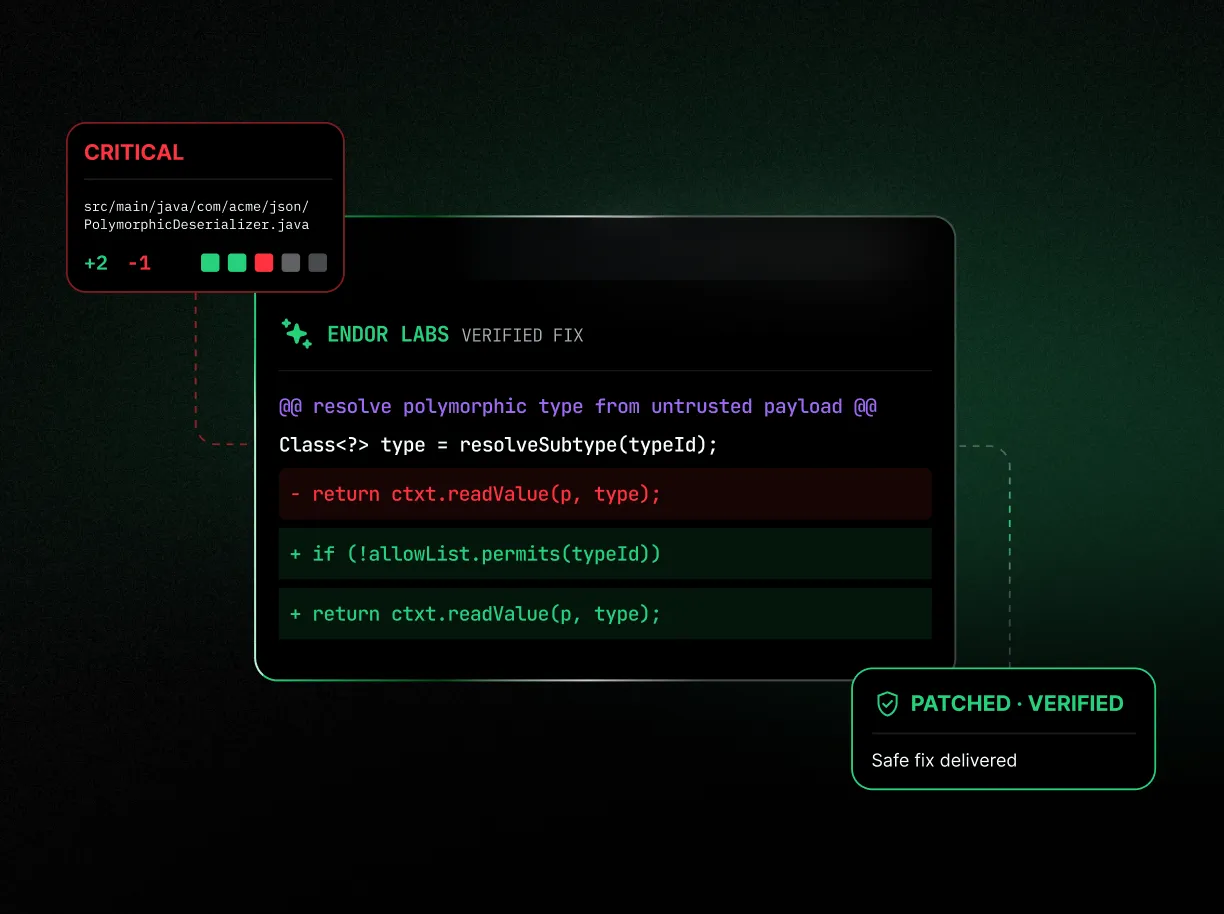
When frontier models find a vulnerability in a library you depend on, Endor Labs' patch factory goes to work immediately. We isolate the minimal change that closes the vulnerability without breaking your code.
Provide the CVE JSON or advisory
Use function-level reachability analysis to prioritize fixes
Get a fully tested, verified fix in less than 24 hours
Consume patches through your artifact manager
Minimal fixes, tested and verified
Every Endor Zero-Day Patch is built in a secure, controlled environment, so the build always produces the exact same result, and anyone can rebuild it to verify the patch.
Minimal fix that preserves functionality
Verified and tested to confirm the vulnerability is resolved
Fully auditable with transparent diffs, tests, and build logs
No hard fork, no lock in.
We don't rebuild open source into a catalog you have to keep buying. The fix goes to the maintainer, who stays in control, and you end up on the official release, not permanently dependent on us.
We send the fix to the maintainer for free
Move off your local patch when the official release is ready
No permanent dependency in your stack
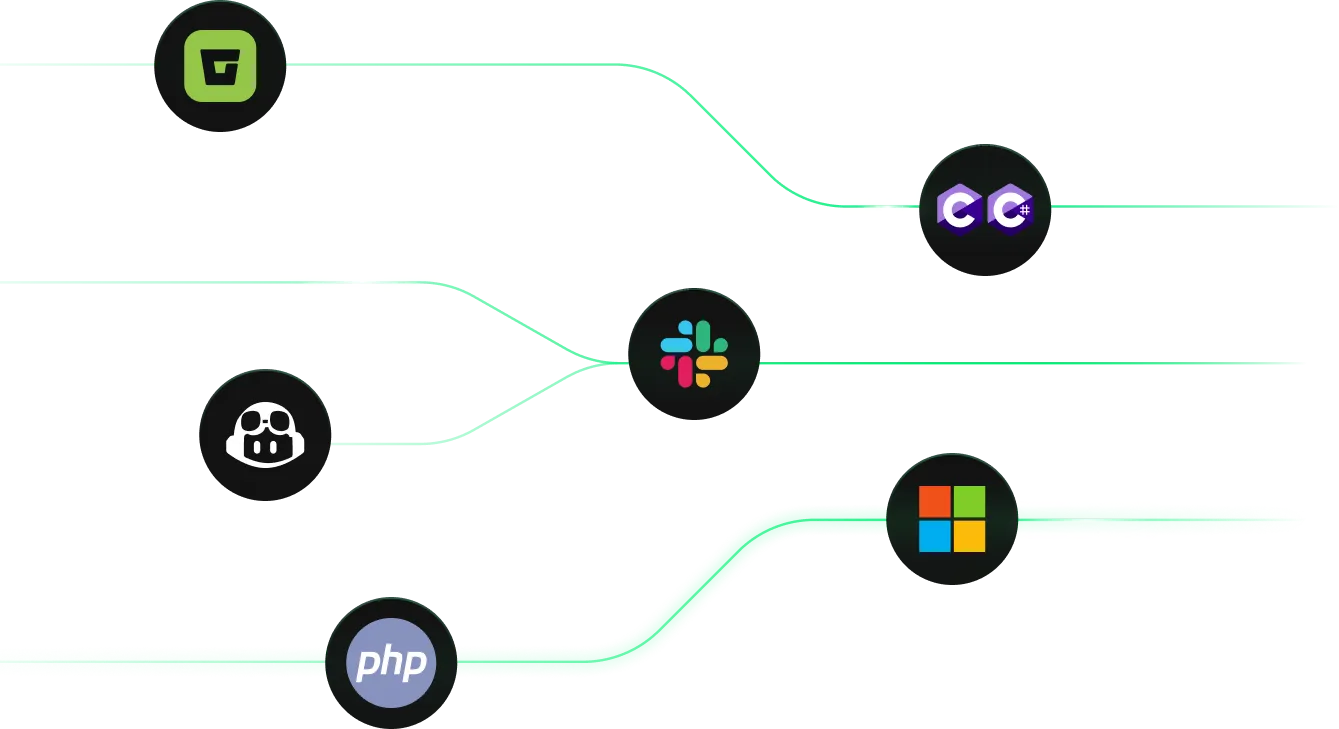
Flowchart showing integration paths from GitHub, GitLab, and PHP to Slack and Microsoft platforms, with a C# icon connected to Slack.

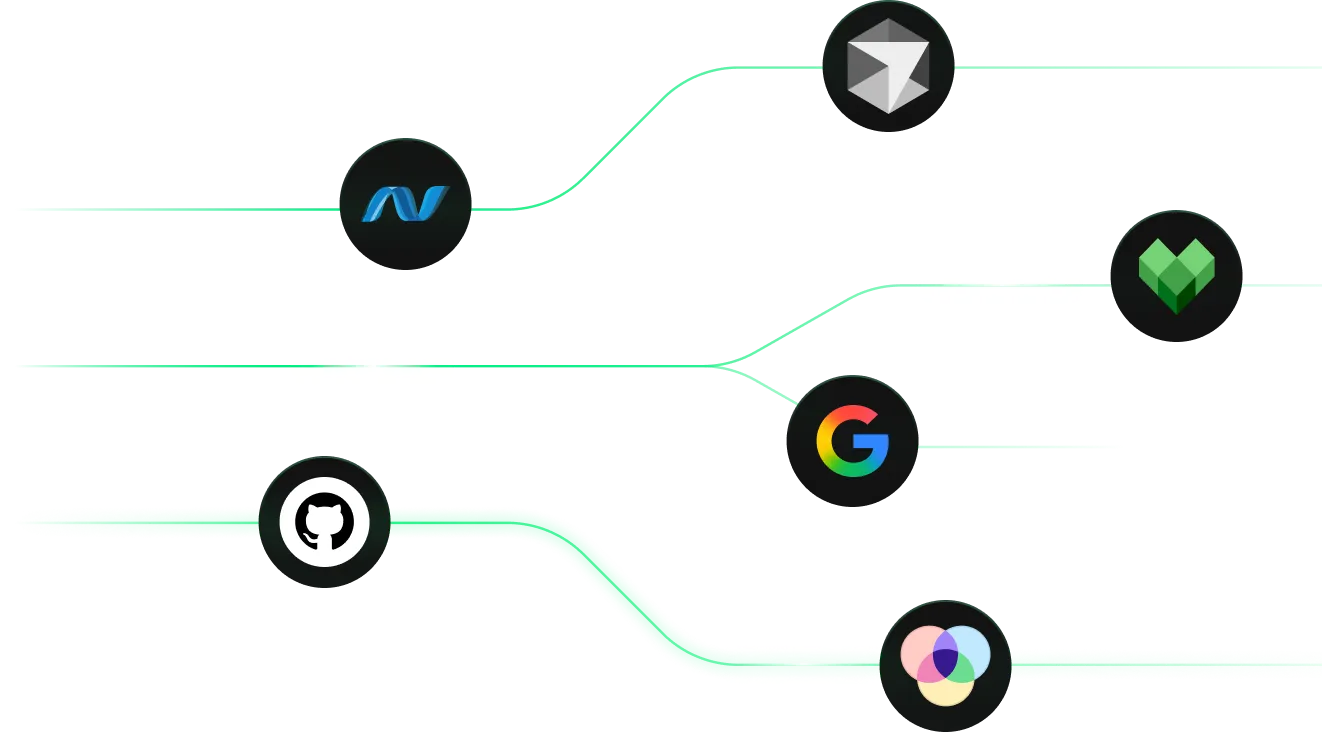
Your Tools, Your Languages
All Secured

Lean how Endor Labs fits into your ecosystem.
Flow diagram connecting software development tools and platforms including .NET, JetBrains, GitHub, Google, and Vercel.

FAQs

What is a zero-day patch?

A verified, tested fix for a newly disclosed open source vulnerability — produced before the upstream maintainer has published one. Endor Labs isolates the smallest safe change that closes the vulnerability, verifies and tests the patch, and delivers it within 24 hours.

How is this different from waiting for the maintainer?

Most tools can only move as fast as the maintainer: they backport a fix that already exists, and when no upstream fix exists yet, you wait. Endor Labs produces an original, minimal fix in that gap, so you’re protected before disclosure instead of after.

Will a patch break my application?

No. Every Endor Zero-Day Patch is a minimal change that removes the vulnerability without changing functionality. We ship the patch with all the artifacts and logs you need to test and verify it yourself.

Does using Endor Zero-Day Patches lock me in?

No. We don’t rebuild open source into a catalog you have to keep buying. We contribute the fix upstream to the maintainer for free, and when the official release lands you move off our local patch onto it. No fork, no permanent dependency.

How do I consume patches?

Through your existing package manager or artifact repository — no workflow change. You can choose a specific patch-dated build for reproducibility, an -endor-latest rolling patched version, or a version that matches the upstream release.

Which vulnerabilities and ecosystems do you patch?

We focus on the vulnerabilities that are actually reachable and exploitable in your code, prioritized with function-level reachability analysis and EPSS.

Ship fixes, not alerts.