Embedded Devices

Secure the software
inside every device
you ship

Endor Labs is the application security platform built for connected products — accurate SBOMs across every language including C and C++, reachability that cuts CVE noise to what's actually exploitable in the device, and safe remediation that doesn't brick the firmware.
Illustration of a green car and a refrigerator with a digital face showing x_x, surrounded by flames, with speech bubbles containing an exclamation mark and symbols representing swearing.
Loved by security teams, painless for developers at:

How Endor Labs secures embedded devices

Inventory every device, in every language — including C and C++
Manifest-based SCA was built for managed package ecosystems and can't accurately inventory firmware written in C, C++, or mixed languages. Endor Labs scans source as the ground truth to produce a credible SBOM, so you can answer "what's in this device" the moment a critical CVE drops.
Cut CVE noise to what's actually exploitable in the firmware
Embedded firmware pulls in thousands of dependencies, most of whose vulnerable functions the device never calls. Reachability-based prioritization gives firmware engineers a short list of real problems instead of hundreds of findings to argue about.
Remediate without bricking the device or triggering a recall
A connected product can't be redeployed like a SaaS app — a single dependency bump can fail safety certification or force a costly recall. Endor Labs shows what an upgrade will break before you commit, and backports patches when an upgrade doesn't fit the release window.
“Endor Labs helped us cut through the noise and focus on what matters. With fewer alerts and more accuracy, our teams now spend more time building and less time chasing false positives.”
Michael Hammond
Michael Hammond

Information Security Engineer, Zebra Technologies

Diagram titled 'SBOMs for C and C++' showing a flow from Firmware source (C, C++, headers, vendored code) to Endor Labs scan (source as ground truth, no build required) to SBOM (CycloneDX + SPDX). Arrows indicate scanning source, not a manifest. Below are labeled boxes for Direct dependencies, Transitive dependencies, and Phantom deps others miss. A note below states 'Ready for CRA, FDA & customer security reviews'.
SBOMs for C and C++
Endor Labs scans source and headers as the ground truth to inventory the firmware components manifest-based tools can't see.
Detect C and C++ dependencies, phantom dependencies, and vendored code by scanning source directly — no build required.
Generate CycloneDX and SPDX SBOMs across every product and release, ready for CRA, FDA, and customer security reviews.
Keep a centralized SBOM record so you can answer "what's in this device" in minutes instead of weeks of manual work.
Learn more
Prioritize real risk
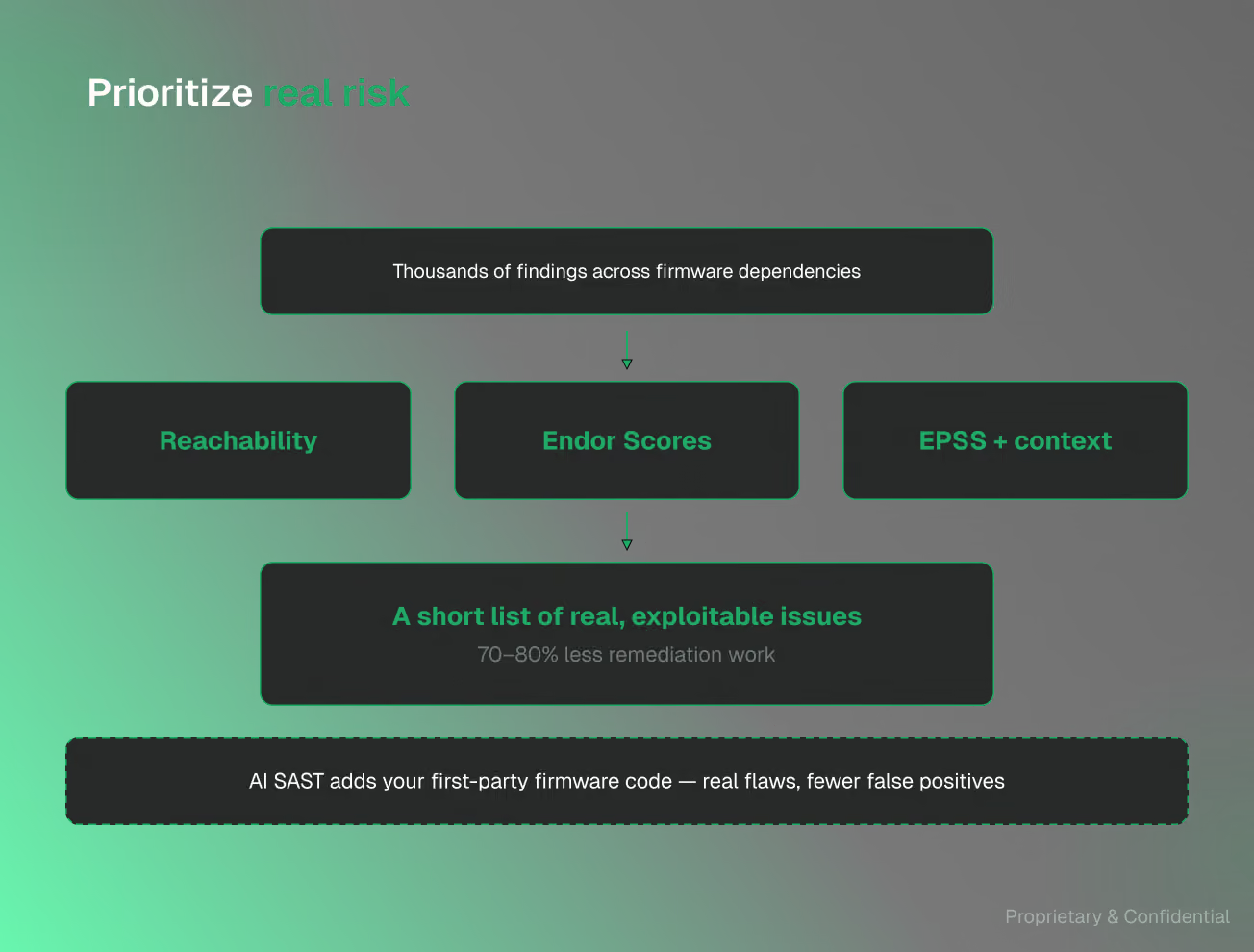
Reachability-based prioritization and AI SAST focus engineers on what's actually exploitable across open-source and first-party code.
Cut remediation workload by an average of 70–80% by filtering out findings that aren't reachable in the code.
Rank C/C++ open-source findings with Endor Scores, dependency-level reachability, and EPSS instead of raw CVE counts.
Add AI SAST to find real flaws in your first-party firmware code while cutting false positives with deployment-aware context.
Learn more
Flowchart showing prioritization of real risk from thousands of firmware findings using reachability, Endor Scores, and EPSS plus context, resulting in a short list of real, exploitable issues with 70-80% less remediation work; AI SAST adds first-party firmware code for real flaws and fewer false positives.
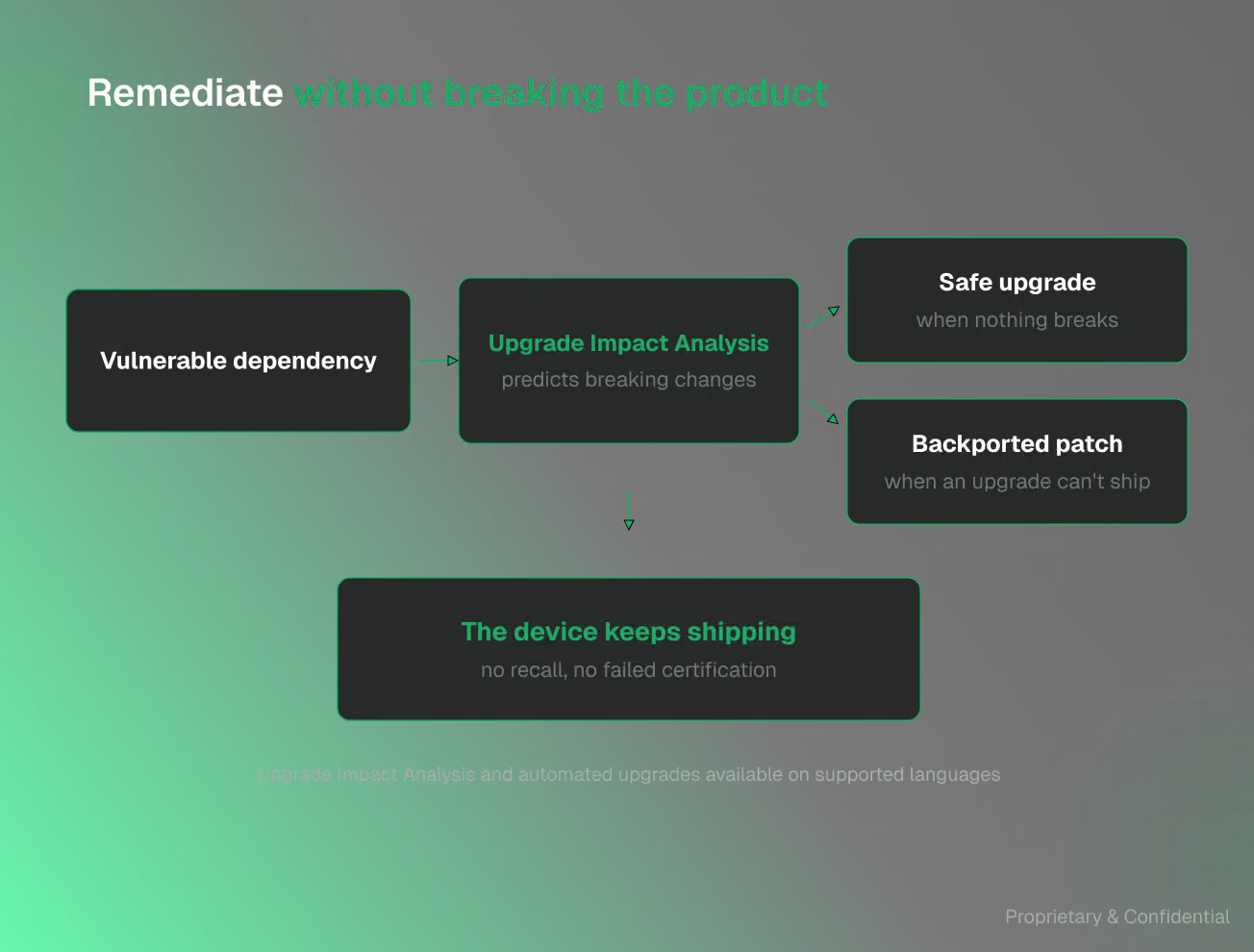
Flowchart titled 'Remediate without breaking the product' showing a process starting with a vulnerable dependency leading to Upgrade Impact Analysis that predicts breaking changes, which then leads to either a safe upgrade when nothing breaks, a backported patch when an upgrade can't ship, or the device keeps shipping with no recall and no failed certification.
Remediate without breaking the product
Fix what matters without risking a recall or a failed certification, and route the work to where firmware engineers already live.
See exactly what an upgrade will break before you commit, with Upgrade Impact Analysis on supported languages.
Apply minimal, backported security patches when an upgrade doesn't fit the certification or release window.
Route findings into the developer workflows your firmware team already uses, not a console no engineer opens.
Learn more
Flowchart showing integration paths from GitHub, GitLab, and PHP to Slack and Microsoft platforms, with a C# icon connected to Slack.

Your Tools, Your Languages
— All Secured
Learn how Endor Labs fits into your ecosystem.
Flow diagram connecting software development tools and platforms including .NET, JetBrains, GitHub, Google, and Vercel.

FAQs

Which languages does Endor Labs support for embedded and firmware code?

Endor Labs supports software composition analysis for C and C++ alongside Java, Python, JavaScript, TypeScript, Go, Rust, C#, Kotlin, Scala, Ruby, PHP, and Swift/Objective-C, so mixed-language firmware is covered in a single scan.

How do you inventory C/C++ when there's no package manifest?

Endor Labs scans your source code and headers as the ground truth rather than relying on a manifest, matching code signatures and embeddings to identify dependencies, vendored code, and phantom dependencies. All dependencies and vendor code must be present in the scanned source, because Endor Labs does not build your code.

Do I get reachability and automated upgrades for C and C++?

C and C++ get dependency-level reachability and Endor Scores to prioritize what's worth fixing. Function-level reachability, Upgrade Impact Analysis, and automated upgrade pull requests are available today for languages like Java, Python, JavaScript, TypeScript, C#, Kotlin, and Scala.

What does AI SAST add for first-party firmware code?

AI SAST uses LLM agents to reason about your first-party code across the whole repository, finding logic and context-dependent flaws that rule-based scanners miss and cutting false positives with deployment-aware prioritization drawn from your Dockerfiles, Kubernetes manifests, and CI configs.

Will this help us meet CRA and other device regulations?

Endor Labs produces the accurate, machine-readable SBOMs (CycloneDX and SPDX) and reachability evidence that CRA, FDA, and customer security reviews require, and lets you document non-exploitable CVEs with evidence regulators and customers accept.

How do we scan a C/C++ repository?

Run endorctl scan --segment-match-languages=c. For a multi-language repository, include your other languages with the --languages flag, and make sure all source and dependencies are present in the scanned folder.

Code without compromise