





A companion to “Why Developer Experience Is the Missing Ingredient in Secure Development,” featuring annotated clips from the Endor Labs developer experience demo.
Every security vendor claims to be “developer-friendly.” In our previous blog, we laid out key principles for building a developer-friendly security architecture. In this companion piece, we’re going to break down what that actually looks like—using short video segments from an Endor Labs demo to show how each principle operates in real developer workflows.
As Matt Brown, a Solutions Architect at Endor Labs, puts it:
“If a developer ends up in the Endor Labs UI, we probably messed up somewhere.”
This blog walks through each stage of the SDLC, paired with video clips that illustrate how Endor Labs integrates with IDEs, pull requests, pipelines, and ticketing systems—without slowing developers down.
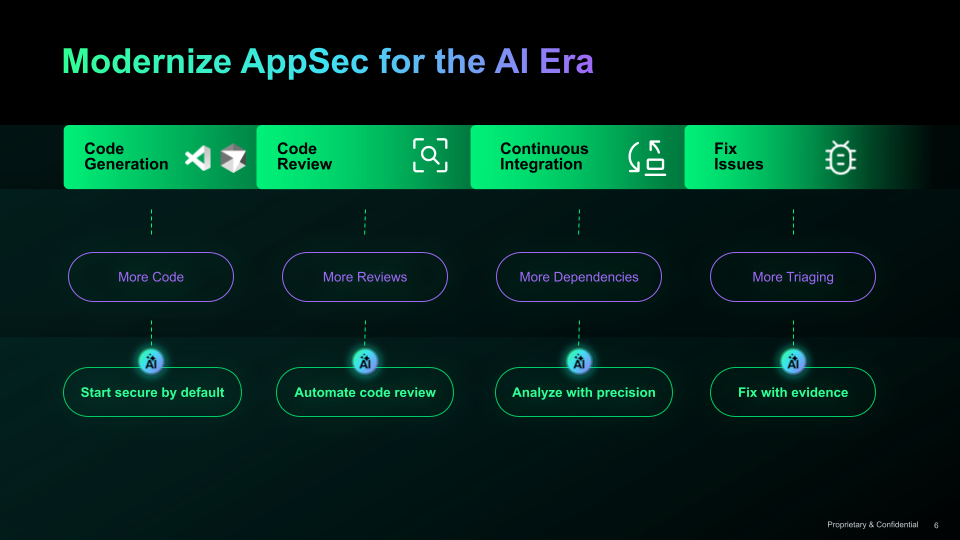
The three principles of a good developer experience
Endor Labs builds around a few simple ideas. We have found that developers consistently say they want three things from security tools.
1. Less time fixing useless vulnerabilities—more time building
Every developer knows the feeling: you open a scan report and get buried under hundreds of “critical” issues you can’t reproduce, don’t use, or can’t possibly fix without breaking something.
That’s noise, not security.
Endor Labs filters out the junk and surfaces only the vulnerabilities that actually matter—reachable, exploitable issues with safe, validated fixes. So instead of wading through false alarms, developers stay focused on building features and shipping code that works.
2. Fit into the developer workflow
If a security tool forces developers into yet another UI or slows down their existing workflow, it will get ignored. Simple as that.
Endor Labs takes the opposite approach: it blends into the tools developers already live in—Cursor, VS Code, GitHub, GitLab, and Jira. The saying inside Endor Labs is, “If a developer ends up in the Endor UI, we probably messed up somewhere.” The goal is to be invisible until the moment you actually need help.
3. Clear, accurate, safe fixes
Developers don’t avoid fixes because they don’t care. They avoid them because they’re afraid of breaking changes, and that fear is justified. Most developers have had the experience of simply upgrading a package version and introducing a behavior change that breaks an app.
Endor Labs removes that worry with upgrade impact analysis. Before a fix ever reaches a developer, the platform validates that it won’t break the codebase. That means when a fix appears, developers know it’s safe to apply.
How Endor Labs improves developer experience at every stage of the SDLC
1. Inside the IDE: preventing vulnerabilities before they’re written
Whether you’re using AI coding assistants like Cursor and Copilot, meticulously hand-crafting every line of code, or somewhere in between, errors are going to creep in. AI assistants don’t always know about newly disclosed CVEs, as their training data is from a fixed point in time. Even the best developers may mistype a dependency name (potentially leading to a typosquatting compromise) or use an insecure method in their code out of habit. Endor Labs addresses these risks by piping live dependency intelligence and secure coding context into the IDE:
- Unsafe packages are identified the moment they’re added.
- Vulnerable patterns generated by the LLM are flagged and fixed.
- Secrets inserted accidentally are caught before commit.
- All of it happens automatically, without the developer having to invoke a scan.
This segment of the video shows an image-upload feature being built and secured in real time—before the first commit is ever pushed.
2. In your SCM: actionable findings without noise
Good cybersecurity is a delicate mix of caution, cynicism, and enablement. If giving developers easy access to scanning tools counts as enablement, then scanning code as it’s pushed into source control might be seen as veering towards caution and cynicism. Immediately after code is pushed to the SCM, Endor Labs:
- Scans only the changes.
- Flags issues directly in the pull request.
- Adds precise, line-level remediation guidance.
- Confirms whether a fix is safe and non-breakin
3. In CI/CD: rare, meaningful, fine-grained build enforcement
In the previous video segment, we discussed finding and action policies that can prevent security vulnerabilities from making it into your production code. Security is important, but broken builds from security tools are a significant source of developer dissatisfaction. Obviously, no one wants to ship vulnerable code, but builds breaking due to problems that are not a true priority is a highly frustrating way to slow down delivery.
Endor Lab’s fine-grained policies ensure pipelines only break when:
- A finding is exploitable and reachable.
- A safe, validated fix is available.
- The issue crosses specific risk thresholds (e.g., EPSS, severity, function-level reachability).
4. In Jira & ticketing: 90% fewer tickets, 100% more signal
Endor Labs dramatically reduces ticket volume by creating tickets only when they’re genuinely worth a developer’s time. A ticket is opened only if:
- A fix is proven safe — Endor Labs has already analyzed the change and confirmed it won’t introduce errors.
- The upgrade won’t break existing code — the platform runs upgrade impact analysis to rule out breaking changes before anything lands in Jira or GitHub.
- The developer can resolve everything with a single merge — one PR, one clean action, no manual dependency wrangling.
- All supporting context and evidence are already included —he developer doesn’t need to research whether the issue is reachable, exploitable, or even real.
In the accompanying demo video, you can see this in action: a single Jira ticket resolves 21 separate vulnerabilities at once, all of which are validated as non-breaking. What used to take days—or even weeks—of back-and-forth suddenly becomes a single, confident click.
And the real-world impact speaks even louder. At Robinhood, Endor Labs helped reduce 2,400 monthly security tickets to just 140, transforming the developer experience
Putting it all together: a developer experience you can see
Across the clips we’ve embedded, a clear pattern emerges. There is a “signature” Endor Labs workflow that shows up again and again:
- Security becomes invisible inside the IDE, quietly preventing vulnerable code and unsafe dependencies before they ever reach a branch.
- Pull requests come with precise, actionable context, so developers immediately understand what’s wrong, why it matters, and how to fix it.
- CI/CD surfaces only trustworthy signals, catching actual risks without constantly breaking builds or slowing teams down.
- Ticket volume drops to the bare minimum because Endor Labs opens tickets only when a fix is safe, validated, and worth a developer’s attention.
- Automated upgrades apply cleanly and safely, backed by impact analysis that ensures they never break code.
Put together, these clips show a consistent reality: developers keep working in the tools they already love, while security fades into the background. What used to feel like a constant obstacle becomes a quiet, reliable safety net—always there, never in the way.
Conclusion: developer experience is a design constraint, not a slogan
This companion blog exists to show, not just tell, how Endor Labs makes good on the developer experience principles outlined in the primary article.
The embedded clips reinforce every point and make it clear that Endor’s developer-first approach isn’t aspirational; it’s already here, running in real developer workflows.
What's next?
When you're ready to take the next step in securing your software supply chain, here are 3 ways Endor Labs can help:

%20(2).avif)