Software Composition Analysis

SCA, but with reachability analysis that cuts 92% of noise.

Your developers use open source packages, AI models, and AI services. Find out what they're using and fix risks fast.

SCA with Reachability

How it works

1

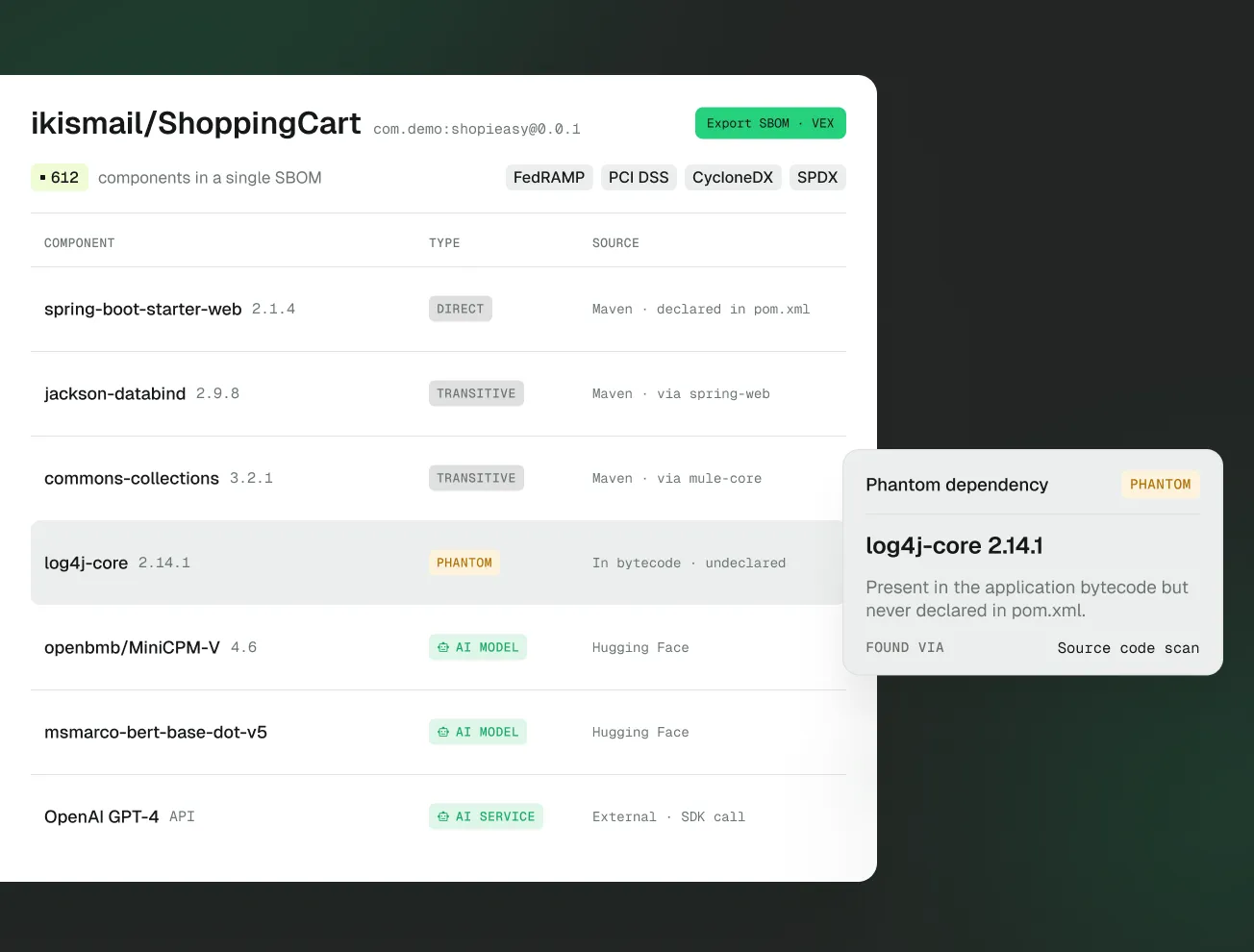
Identify all dependencies

Go beyond classic SCA to discover all direct and transitive dependencies, including AI models and services.

2

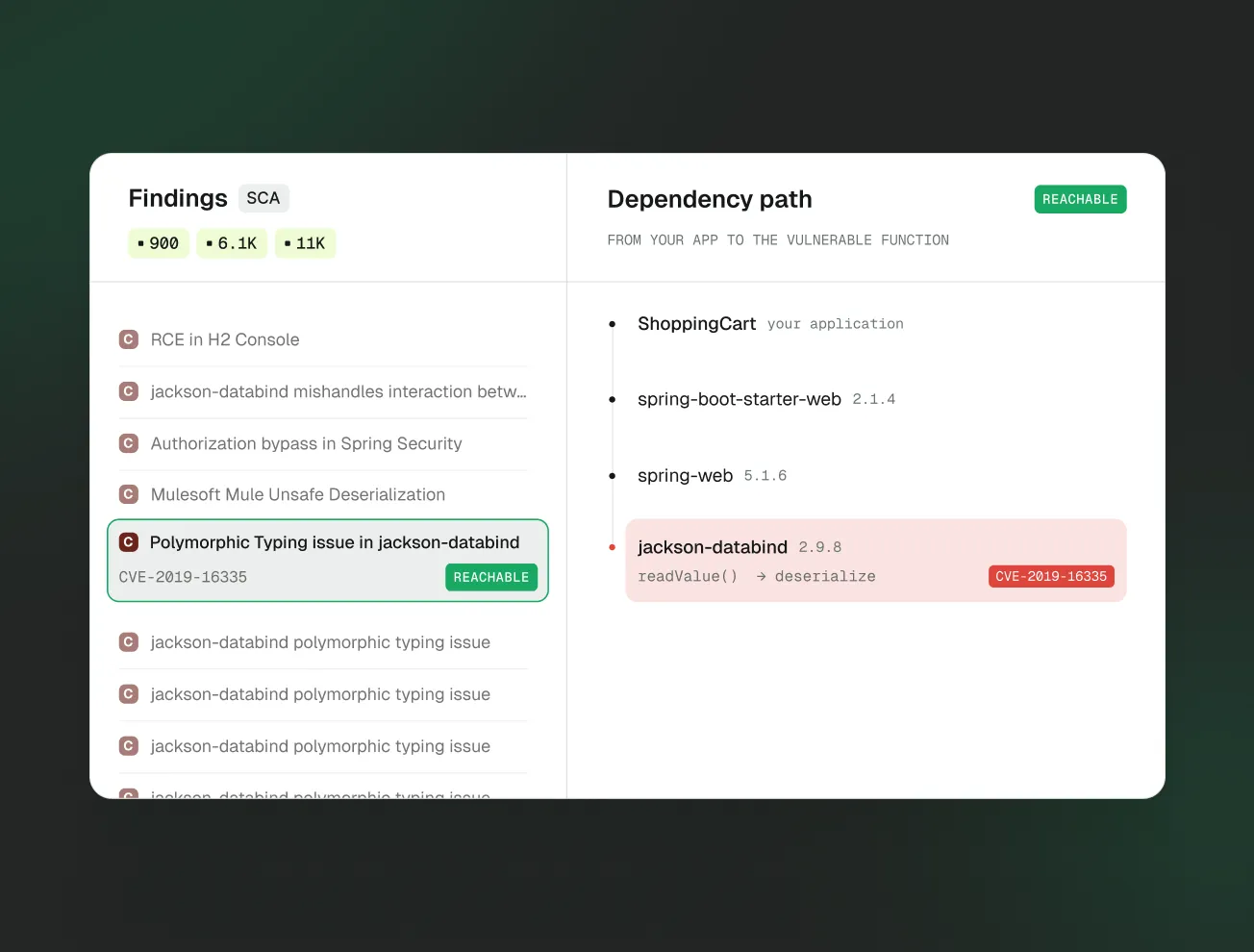
Prioritize by danger

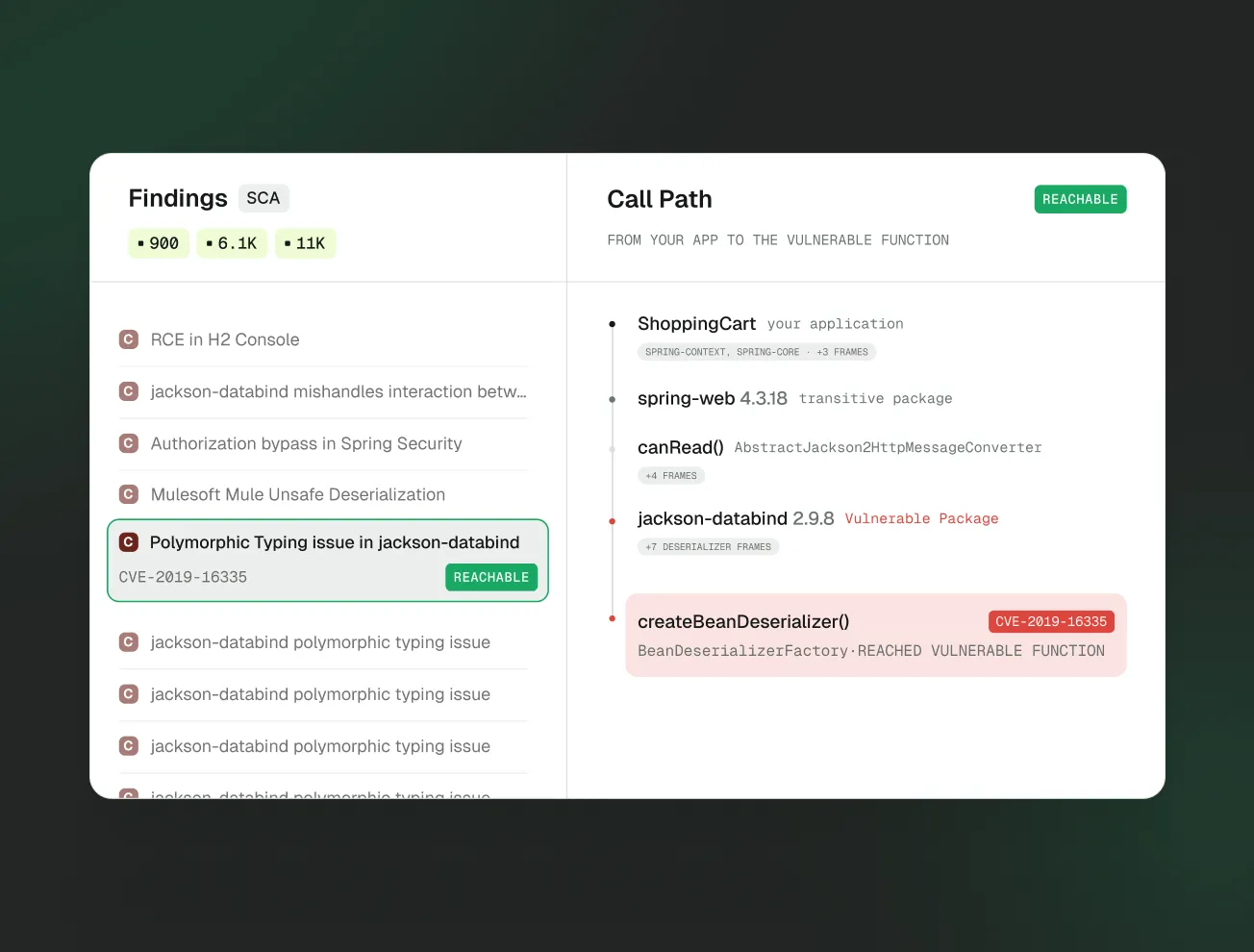
Combine reachability and EPSS to determine which vulnerabilities are the most dangerous, and remediate those first.

3

Fix faster

Identify upgrades that can be performed without risk of breaking changes and help engineering plan for the hard ones.

Securing code written by humans and AI at:

Without the tedium and minutia of tracking down individual items that might not matter, we can focus on the remaining vulnerabilities that would impact customers and our FedRAMP compliance."

Raphael Theberge

Head of Security Enablement at Relativity

Identify

Know what’s in your code

The Endor Labs platform uses an unparalleled knowledge base of open source libraries and code relationships to understand your 3rd party dependencies— including open source libraries, AI models, and AI services.

  • Get an accurate inventory (direct and transitive dependencies) and export SBOM / VEX documents
  • Correlate your inventory against the Endor Labs Vulnerability Database, which consolidates data from NVD, GHSA, and OSV sources. It also includes proprietary function-level reachability analysis and detailed annotations for all known vulnerabilities (all severities) from 2018 onward, with coverage extending back to 2005 for most.
  • Detect OWASP Top 10 risks for open source, including CVEs, malicious code, and license risks

Prioritize 

See which vulnerabilities are riskiest

Endor Labs provides several filters to reduce false positives and decide which risks to address first. When used together, customers achieve a 92% reduction in findings, leaving just a handful to fix.

  • Is it in production code (not test code)?
  • Is there a fix available?
  • Is the affected function reachable?
  • Is there a high probability of exploit (high EPSS)?
  • How severe could the impact be (CVSS)?

Remediate

Actually fix vulnerabilities

Give developers the information needed to upgrade dependencies with confidence.

  • For each version upgrade option, identify whether conflicts with other dependencies will cause problems (like breaking changes)
  • Compare the number of findings fixed by a single upgrade to the effort it will take to perform the upgrade
  • Improve mean time to remediation (MTTR) with smarter automatic pull requests and Endor Patches

Not even your developers have this information! They’ll thank you for saying “This upgrade will be easy” or “This other one might take a few sprints because there are breaking changes.”

AppSec for The Software Development Revolution