




Software development is in the middle of a structural shift.
The pace of AI-assisted development accelerated in ways that were hard to predict even a few years ago. 2024 brought us autocomplete in the IDE, which felt magical at the time. Then, almost overnight, developers were vibe-coding full-stack apps on weekends, and tools like Claude Code became a default part of the stack. What once made for a great day—shipping 100 lines of code—has shifted to developers shipping 1000s of lines, backed by swarms of agents at their fingertips.
The developer’s role is moving from author to supervisor of multiple agents working in tandem. Velocity increases, but the amount of human attention applied to each change drops sharply. The development loop itself has evolved into plan → prompt → review, concentrating power and risk in the prompt while collapsing traditional guardrails.
In the past, security was bolted onto the development cycle through fixed checkpoints. Code would ship, scans would run, issues would be flagged and triaged, criticals addressed, and the loop would repeat until production looked safe. Security operated as a visible gate, slowing progress and compounding cost over time.
AI creates an opportunity to rethink that approach. Instead of treating security as an external hurdle, it can become an invisible layer of control running alongside development itself. Issues surface earlier, when they’re cheaper to fix, reducing rework and tech debt without interrupting velocity.
What we heard from security and engineering leaders
We saw this surface clearly at our AI Summit, where we convened executive leaders—CISOs, CIOs, and CTOs—responsible for strategy, risk, and innovation.
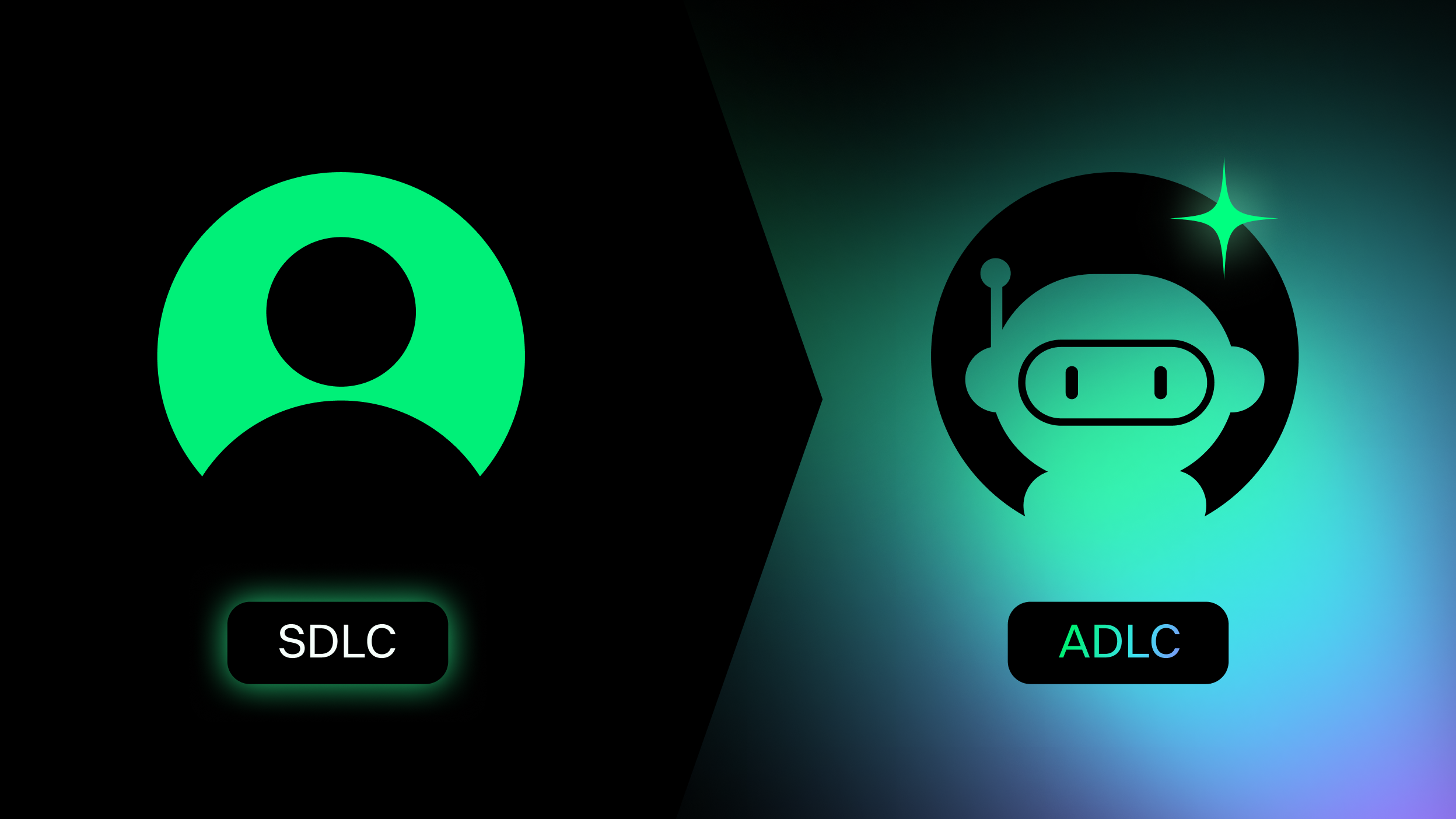
Their core goals, regardless of team size or industry, haven’t changed. Security leaders still have to manage risk while enabling the business. Engineering leaders are still pushing to deliver more innovative experiences at a higher velocity. What’s new is the shared recognition that the AI SDLC is here, and that it represents a new opportunity to integrate security directly into AI coding workflows without compromising velocity.
The common ground is now the desire to accelerate adoption and innovation without compromising on security, with invisible guardrails in place so teams can move faster while security runs alongside development rather than standing in its way.
Three concerns are keeping security leaders up at night
We heard three key concerns from security leaders at the summit:
- Both security and engineering teams need to move faster to keep pace with the market. Teams are losing innovation to time spent triaging issues without clear guidance or evidence of what actually matters.
- Any new paradigm has to feel seamless to adopt. Change management is hard, which means security must live inside the developer workflow and not operate as something separate from it.
- Risk is not simple or isolated. The most meaningful failures do not come from a single vulnerability. They come from how services interact, how data flows, and how trust boundaries are crossed. AI amplifies these risks by operating across the system faster than humans can track.
The result is a feeling that was described bluntly: we want to move faster, but there are so many challenges we end up compromising on security. We want to code without compromising safety.
How to integrate security into the AI SDLC
The goal isn’t to slow AI down. It’s to give teams confidence as velocity increases. That starts with security teams embracing context engineering for the AI SDLC that integrates security context directly into AI workflows:
- Move security earlier, into code generation itself
Catching issues after merge doesn’t scale when humans aren’t writing most of the code. Teams need security intelligence available while code is being planned and generated, not just after it lands. - Streamline code review, not just output
Modern risk lives in interactions, not individual lines of code. Understanding services, dependencies, and data flows as a connected system is now foundational. - Automate remediation with context, not tickets
When new vulnerabilities emerge, the important question isn’t whether a CVE exists, but whether it’s exploitable in your environment and how to fix it without human triage becoming the bottleneck.
The bigger picture
AI doesn’t just accelerate the existing SDLC. It introduces a new opportunity to integrate security in a way that simply wasn’t possible a few years ago.
The teams that succeed won’t be the ones that force AI into old workflows. They’ll be the ones who realize that, just like a car, the brakes are what make speed possible. Real progress comes from building the controls, feedback loops, and trust mechanisms that let intelligence move fast without spinning out.
That shift is already underway. The only real choice left is whether your SDLC evolves with it.
What's next?
When you're ready to take the next step in securing your software supply chain, here are 3 ways Endor Labs can help: