SCA with Reachability

See which open source vulnerabilities are exploitable
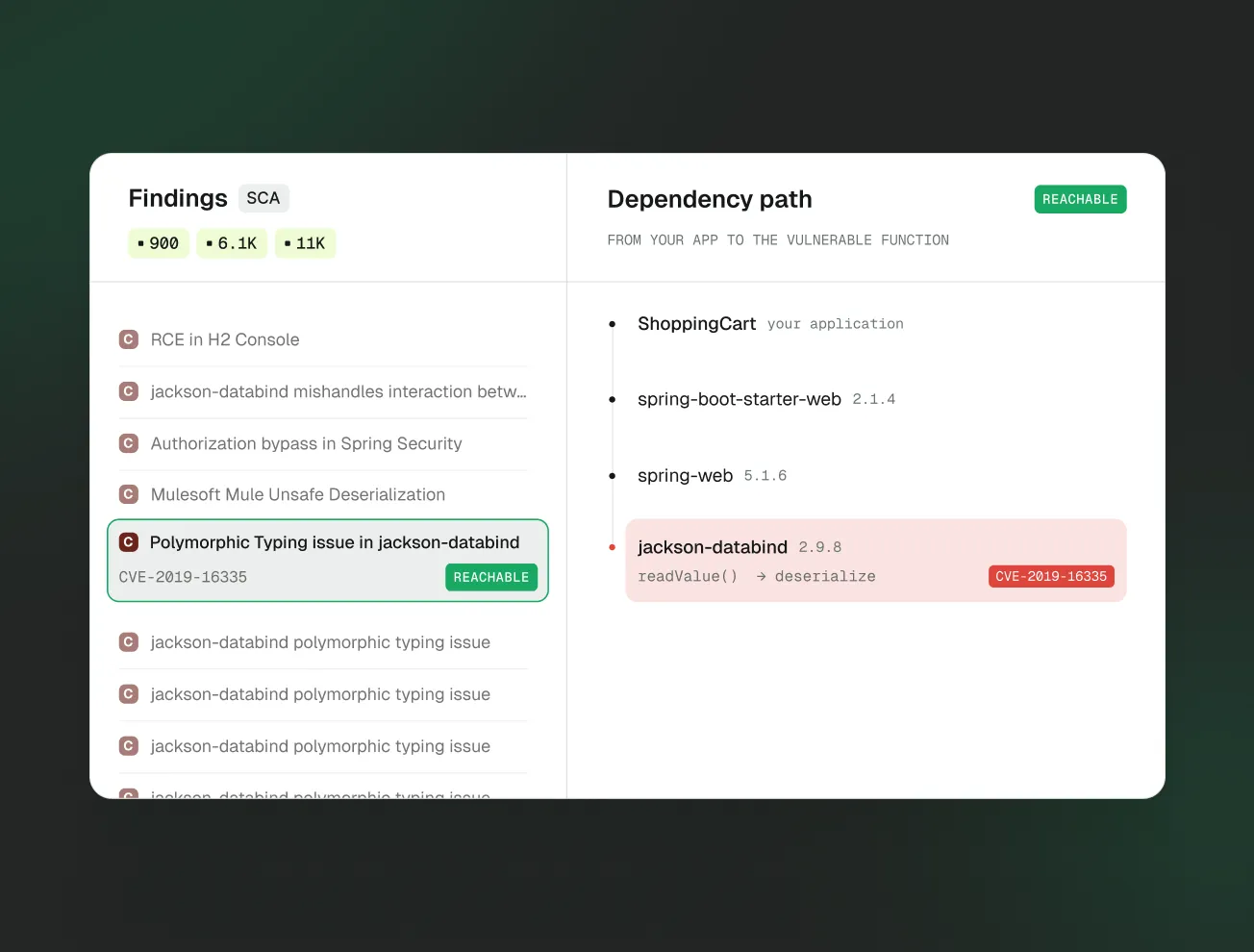
Traditional SCA lists every CVE in every declared dependency, burying real risk in thousands of findings. SCA with function-level reachability analysis knows which vulnerabilities are callable in your application, cutting findings by 92% so developers only see what matters.
Loved by security teams, painless for developers at:

How SCA with Reachability works

Cut through the noise of vulnerabilities that can't be exploited
Traditional SCA flags every CVE in every declared dependency, and teams spend hours triaging vulnerabilities that turn out to be unreachable. Function-level reachability filters those out, so almost everything that reaches a developer is worth fixing.
Find the dependencies and risks traditional SCA misses
Manifest-based tools miss transitive dependencies, phantom dependencies, and AI models pulled in by the application. SCA with Reachability scans source code as ground truth to build a complete inventory, including AI models and services.
Stop spending engineering time on remediation with no business value
Every security-driven upgrade risks breaking changes, retesting, and rollback, and backlogs grow faster than teams can clear them. Reachability-based prioritization and upgrade guidance keep developer time on the fixes that actually reduce risk.
“Over 97% of vulnerabilities flagged by our previous tool weren't reachable in our application. Endor Labs shows the few impactful vulnerabilities, so we can patch quickly, focusing on what matters.”
Travis McPeak

Security Lead, Cursor (Anysphere)

Function-level reachability
Identify which vulnerabilities are actually callable in your code, down to the function.
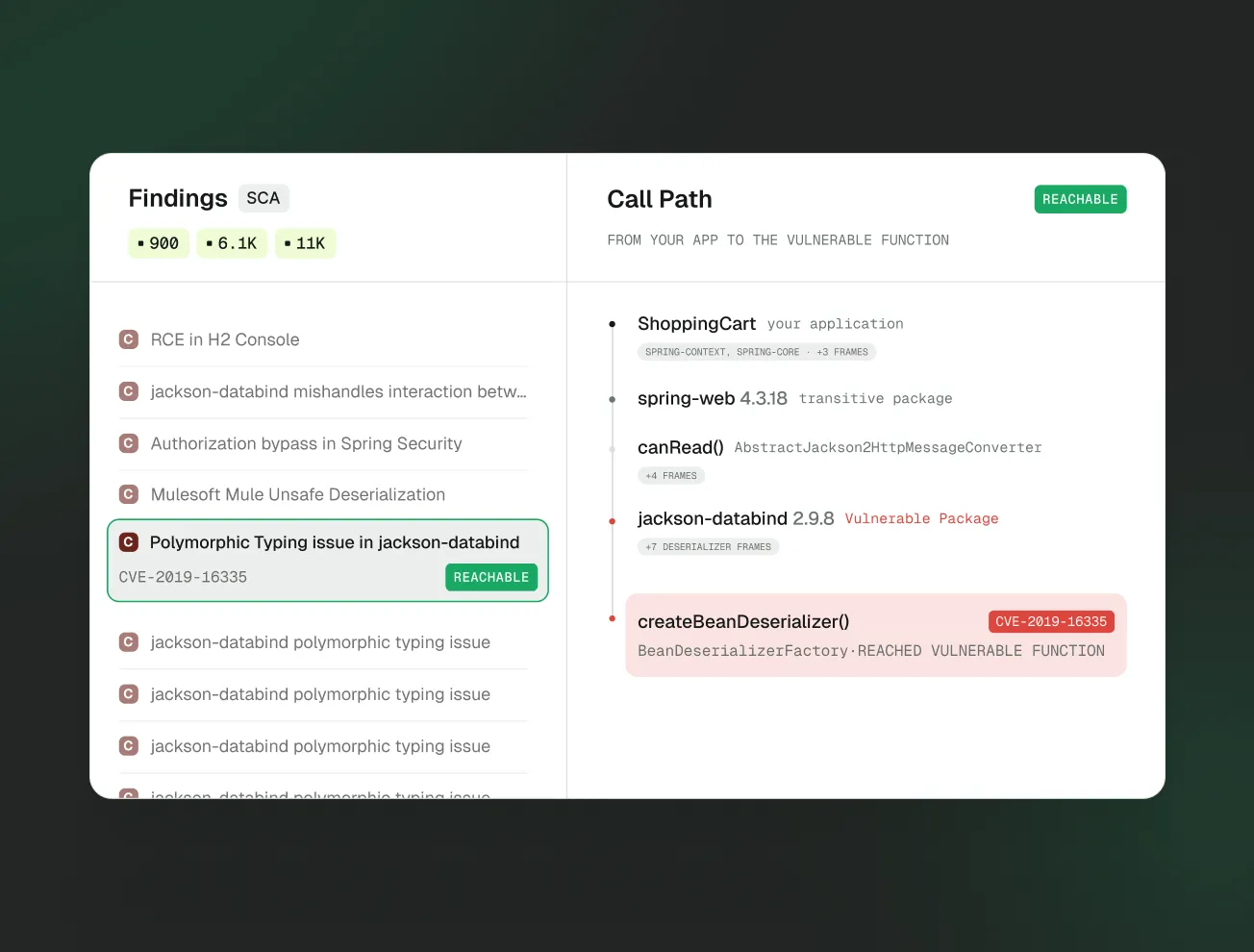
Cut SCA findings by 92% by filtering out vulnerabilities that are not actually callable in your code.
Trace exploitability across direct and transitive dependencies down to the specific vulnerable function.
Combine reachability with EPSS, fix availability, and production context to rank what to fix first.
Learn more
Complete inventory
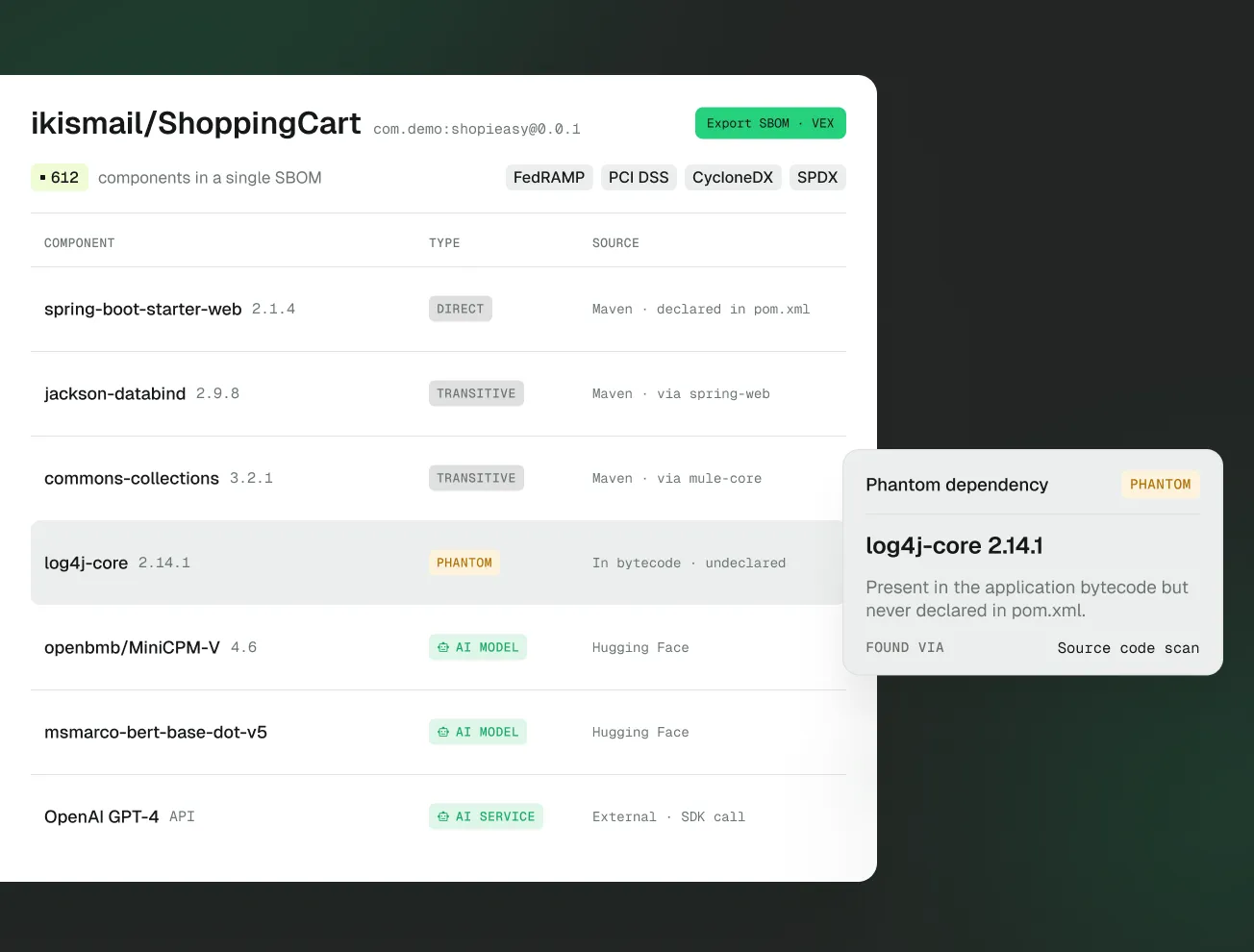
Discover every direct, transitive, and phantom dependency — including AI models — from source code.
Discover every direct, transitive, and phantom dependency by scanning source code, not just manifest files.
Inventory AI models and AI services alongside open source libraries in a single SBOM.
Export SBOM and VEX documents that meet FedRAMP, PCI DSS, and other compliance requirements.
Learn more
Safe remediation
Guide developers to the upgrades that fix the most risk with the least disruption.
Tell developers which upgrades are safe and which will introduce breaking changes before the work starts.
Resolve more findings per upgrade with automated pull requests that bundle related fixes.
Patch transitive dependencies at build time when an upgrade is not practical.
Learn more
Flowchart showing integration paths from GitHub, GitLab, and PHP to Slack and Microsoft platforms, with a C# icon connected to Slack.

Your Tools, Your Languages
All Secured

Learn how Endor Labs fits into your ecosystem.
Flow diagram connecting software development tools and platforms including .NET, JetBrains, GitHub, Google, and Vercel.

FAQs

What does 'reachability' actually mean?

Instead of asking whether a vulnerable library is present, reachability asks whether the vulnerable function is actually callable in your application. Endor Labs analyzes this at the function level across direct and transitive dependencies.

How much noise does it remove?

Function-level reachability cuts SCA findings by 92% by filtering out vulnerabilities that aren't callable in your code, so developers focus on what's exploitable.

What does it find that manifest-based SCA misses?

It scans source code as ground truth to catch transitive dependencies, phantom dependencies, and AI models and services that manifest-based tools miss entirely.

How does it help with remediation?

It tells developers which upgrades are safe and which introduce breaking changes before the work starts, bundles related fixes into automated pull requests, and can patch transitive dependencies at build time when an upgrade isn't practical.

Can it support our compliance needs?

Yes. It builds a complete inventory including AI models and exports SBOM and VEX documents that meet FedRAMP, PCI DSS, and other requirements.

How does it prioritize what to fix first?

It combines reachability with EPSS, fix availability, and production context, and draws on proprietary CVE annotations going back to 2018 to rank the findings that matter most.

Code without compromise